


Key Sample Information:
- Sample Constraints
- Maximum size: 1.5 × 1.2 cm
- Maximum thickness: < 6 mm
- Piezoelectric scanners:
- Scanner 10678JVHC: 178 × 178 × 5 µm (X/Y/Z)
- Scanner 10405EVLR: 14 × 14 × 3 µm (X/Y/Z)
- Detector: 4-quadrant photodiode
- Resolution: Atomic resolution; vertical resolution in the sub-nanometer range
- Accessibility: Self-service for staff and PhD students after training by the technical manager
- Location: Rue J. Starcky
Available Accessories
- STM head (Scanning Tunneling Microscopy)
- Temperature controller
- Magnetic controller
- Liquid measurement cell
- Temperature measurement cell
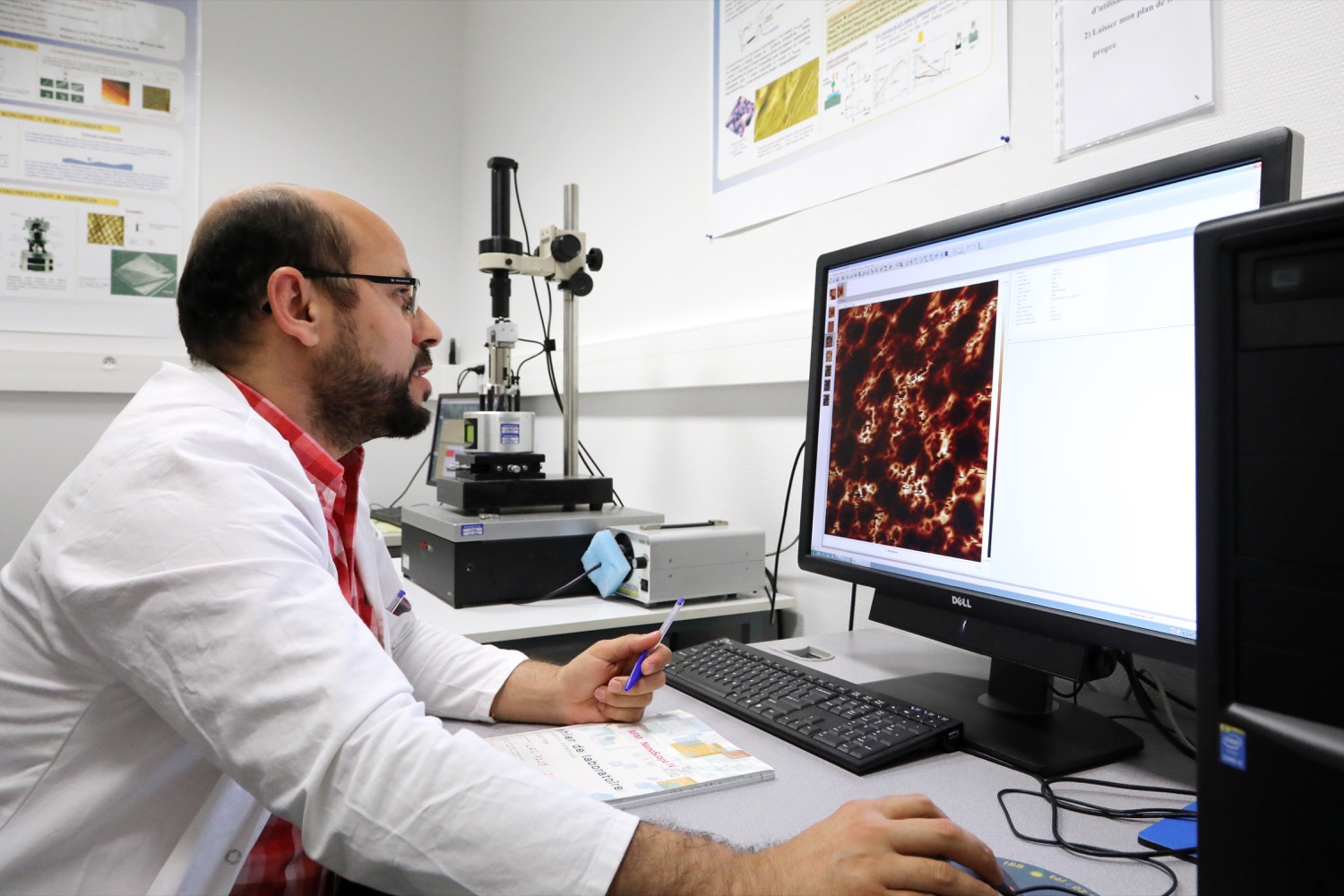
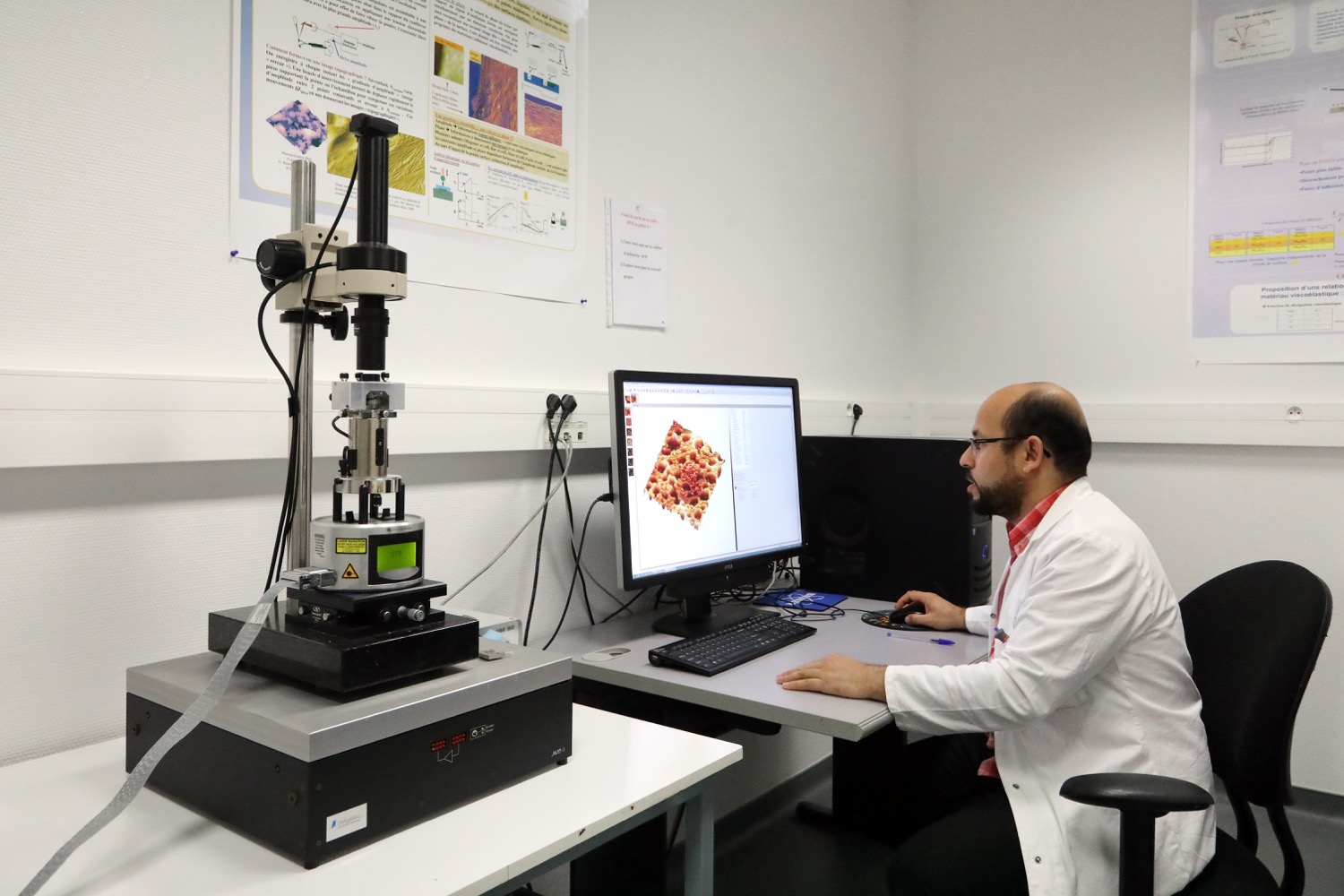
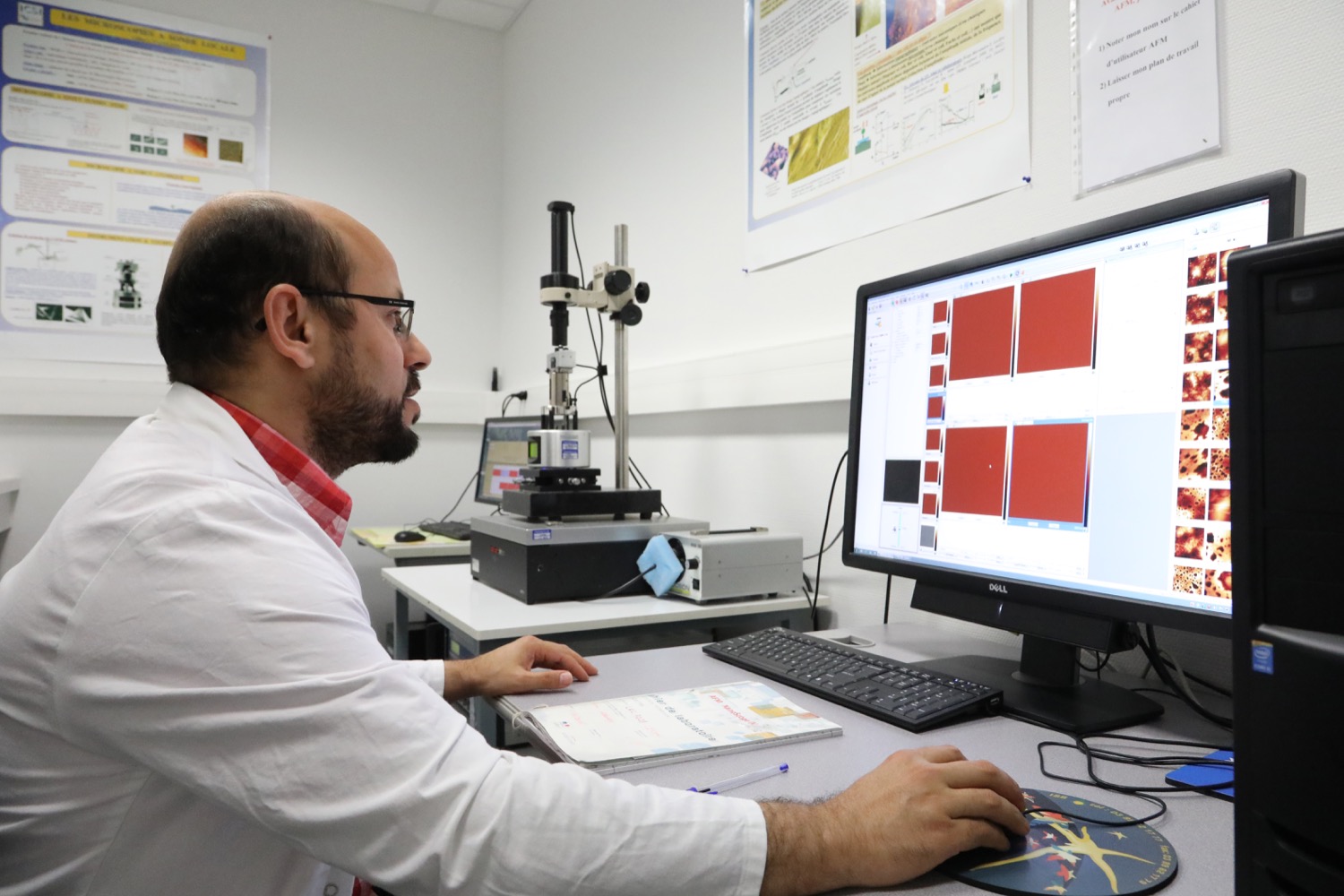
Atomic Force Microscope – NanoScope IV
The NanoScope IV is a high-performance atomic force microscope designed for topographic and functional surface analysis at the nanometer scale. It is particularly well-suited for the characterization of local mechanical, electrical, and magnetic properties.
What is it for ?
The NanoScope IV enables:
- High-resolution surface morphology imaging
- Mapping of local mechanical properties (modulus, adhesion, etc.)
- Analysis of electrostatic and magnetic contrast
- Measurement of intermolecular forces
Fields of application:
-
Nanostructured materials (metals, polymers, composites)
-
Thin films, coatings, and layers
-
Nanotechnology and microfabrication
-
Characterization in liquid or controlled environments
-
Applications in physics, chemistry, and biology
Available Measurement Types
Operating Modes
-
Contact mode:
-
Topography
-
Friction
-
Adhesion
-
Force modulation
-
-
Resonant modes:
-
Tapping mode
-
Phase contrast
-
KPFM (Kelvin Probe Force Microscopy)
-
EFM (Electrostatic Force Microscopy)
-
MFM (Magnetic Force Microscopy)
-
-
PeakForce QNM mode:
-
Quantitative mapping of nanomechanical properties (Young’s modulus, adhesion, deformation)
-
Operating Environments
-
Air
-
Liquid
-
Controlled atmosphere