

Accueil » The thematic axes » I2M Interfaces and Multidimensionnal Materials »
Wetting and assembly of nano-microparticles
Wetting and assembly of nano-microparticles
Laurent Vonna laurent.vonna@uha.fr
Wetting of Textured Substrates
- Control of wettability: Demonstrated ability to control the wettability of surfaces through surface texturing, utilizing techniques such as femtosecond laser processing.
- Contact angle hysteresis and droplet behavior: Investigated the relationship between surface texture and contact angle hysteresis, droplet pinning, and faceting.
- Wilhelmy plate tensiometry: Employed the Wilhelmy plate technique to characterize the wetting properties of highly liquid-repellent surfaces and measure triple-line anchoring forces.
- Bacterial adhesion: Studied the influence of surface wettability on bacterial adhesion, identifying the role of air trapping and surface texture.
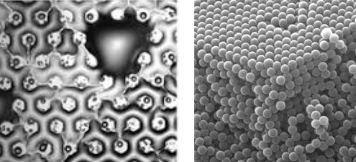
Assembly and Stability of Nano- and Microparticle Assemblies
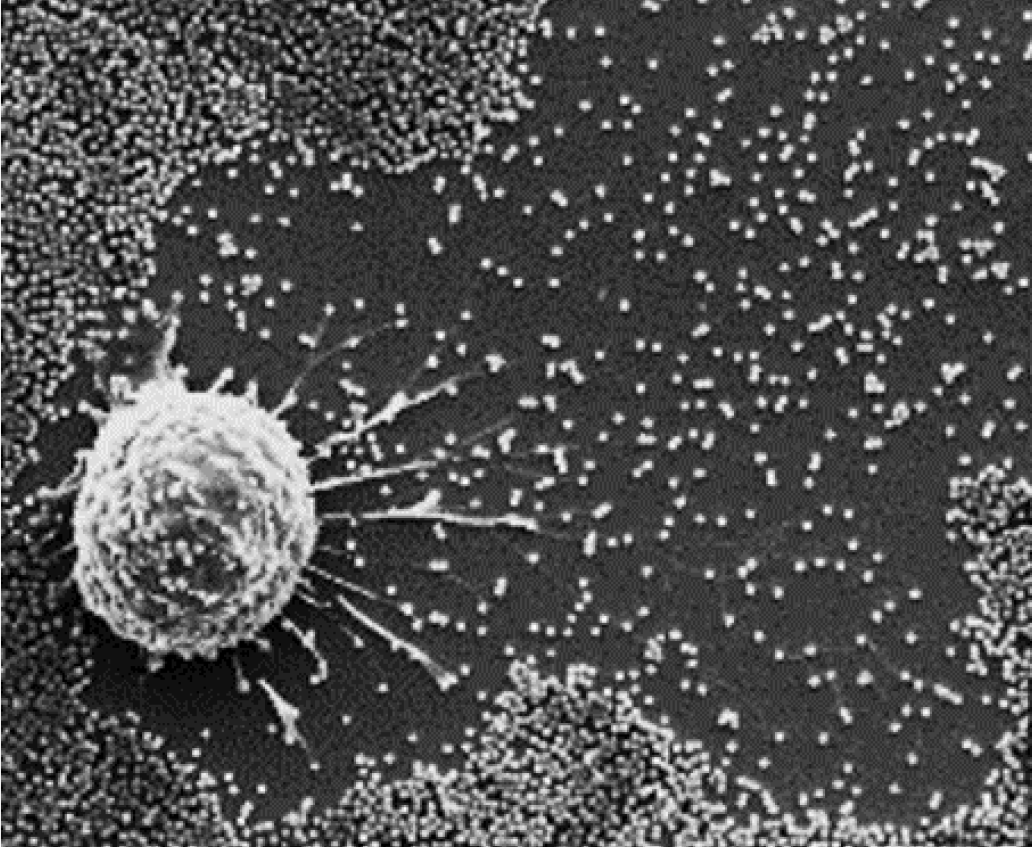
- Growth modes of metal coatings: Investigated the growth mechanisms of metal nanoparticles on elastomer substrates, such as polydimethylsiloxane (PDMS), and the influence of substrate properties on coating morphology.
- Particle-based coatings: Developed and characterized particle-based coatings for various applications, controlling their morphology, stability, and functional properties.
- Self-assembly: Utilized self-assembly techniques to create ordered structures from nanoparticles and microparticles, investigating the factors influencing their formation and stability.
Properties of Elastomers
- Adhesion properties: Studied the adhesion properties of elastomers, focusing on contact formation between soft elastic hemispheres and micropatterned substrates.
- Growth of metal coatings: Investigated the growth mechanisms of metal nanoparticles on elastomer substrates, including the influence of substrate properties and deposition conditions.
- Cross-linking density: Determined the cross-linking density of elastomers using swelling experiments and mechanical testing, relating it to their macroscopic behavior and mechanical properties.
- Adhesive properties: Explored the adhesive properties of elastomers, including their ability to adhere to various surfaces and withstand mechanical stress.
- Wetting properties: Investigated the wetting properties of elastomers, including their ability to repel or retain liquids, and the influence of surface texture and chemical composition.
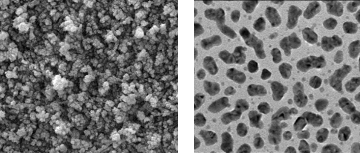
- Texturing: Developed methods for texturing elastomers using femtosecond laser processing, controlling their wettability, bacterial adhesion, and other properties.
IS2M
Bâtiment CNRS
15, rue Jean Starcky - BP 2488
68057 Mulhouse cedex
Bâtiment IRJBD
3 bis, rue Alfred Werner
68093 Mulhouse cedex
tel: (+33)3 89 60 87 00
fax: (+33)3 89 60 87 99
