

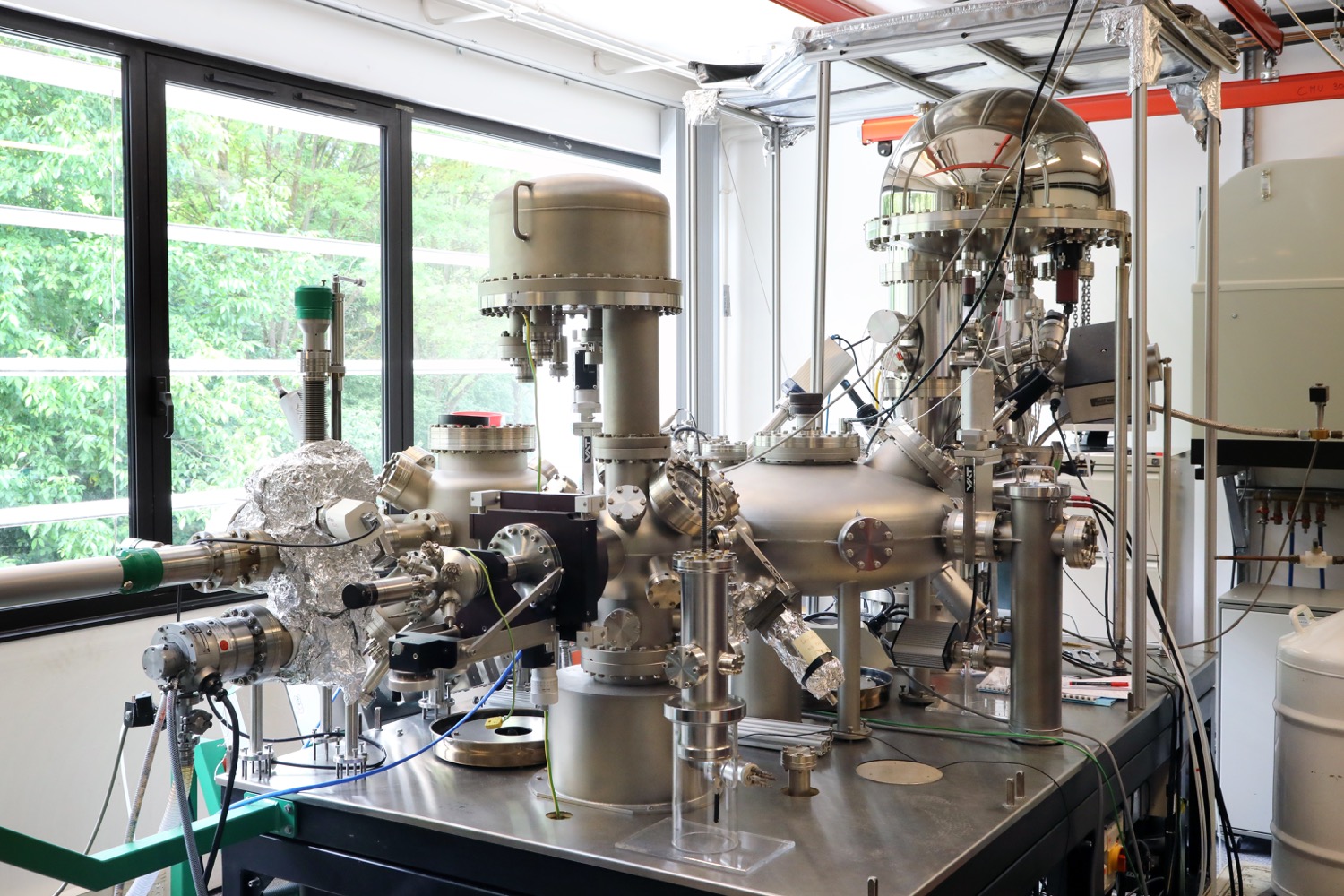
Key Sample Information:
-
Location: rue Jean Starcky
-
Automated dual-anode monochromatic X-ray source (Al/Ag):
- Al Kα (1486.6 eV): XPS analyses with an analysis depth of approximately 10 nm, for the determination of elemental composition and chemical states (0–1,480 eV).
- Ag Lα (2984.3 eV): HAXPS (Hard X-ray Photoelectron Spectroscopy) analyses with an analysis depth of up to 20 nm, allowing the characterization of deeper layers and the analysis of chemical states (0–2,980 eV).
- 2D Analyzer: hemispherical and spherical-mirror analyzer, with a mean radius of 165 mm, allowing both XPS spectroscopic and imaging acquisitions.
- Detector: DLD (Delay Line Detector), consisting of a stack of three microchannel plates (MCPs) combined with a two-dimensional delay line. It can operate in three modes:
- Scanning spectroscopic mode
- Parallel imaging mode, providing a resolution of 256 × 256 pixels
- Non-scanning (“snapshot”) spectroscopic acquisition mode, allowing instantaneous acquisition of a spectrum.
- Operating vacuum: Ultra-High Vacuum (UHV), between 10⁻⁹ and 10⁻¹⁰ mbar
- Energy resolution: 0.22 eV (at the Fermi level)
- High-flux Minibeam 4 ion source: monoatomic Ar⁺ ion beam (0.5 and 4 keV)
- AXIS charge compensation system: for the analysis of non-conductive samples
- Elements detected: all elements from atomic number Z = 3 onwards (except H and He), with a concentration > 0.1%
- Analysis depth: 3 to 20 nm, surface analysis
- Analysis area: from 15 µm diameter up to 0.7 mm × 0.3 mm (0.21 mm²)
- Sample dimensions: from 2 × 2 mm up to 70 × 30 mm, maximum height: 14.5 mm
- Accessibility: not available for open/self-service access
- Data processing: carried out by the facility manager or by the requester after training on CasaXPS software.
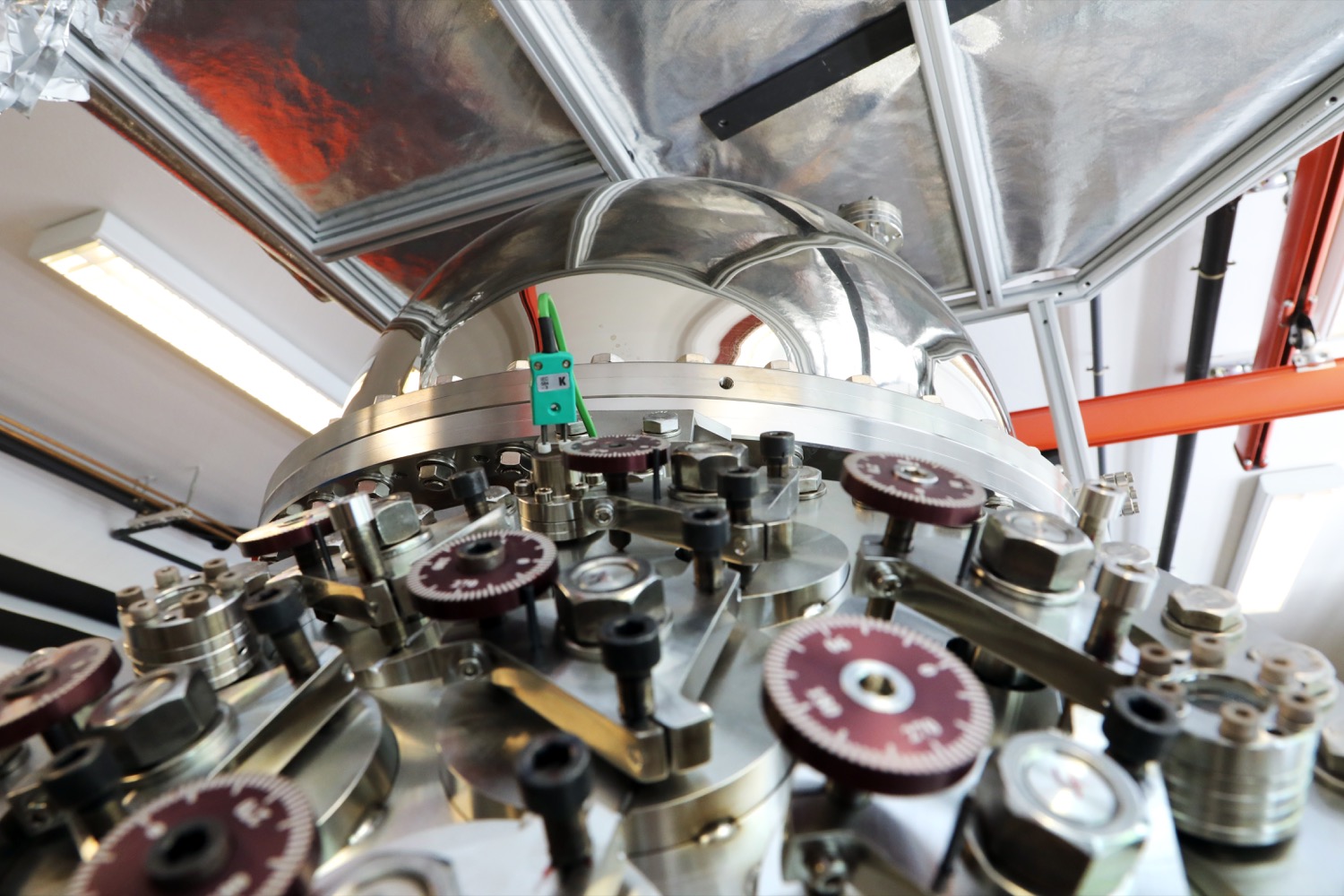
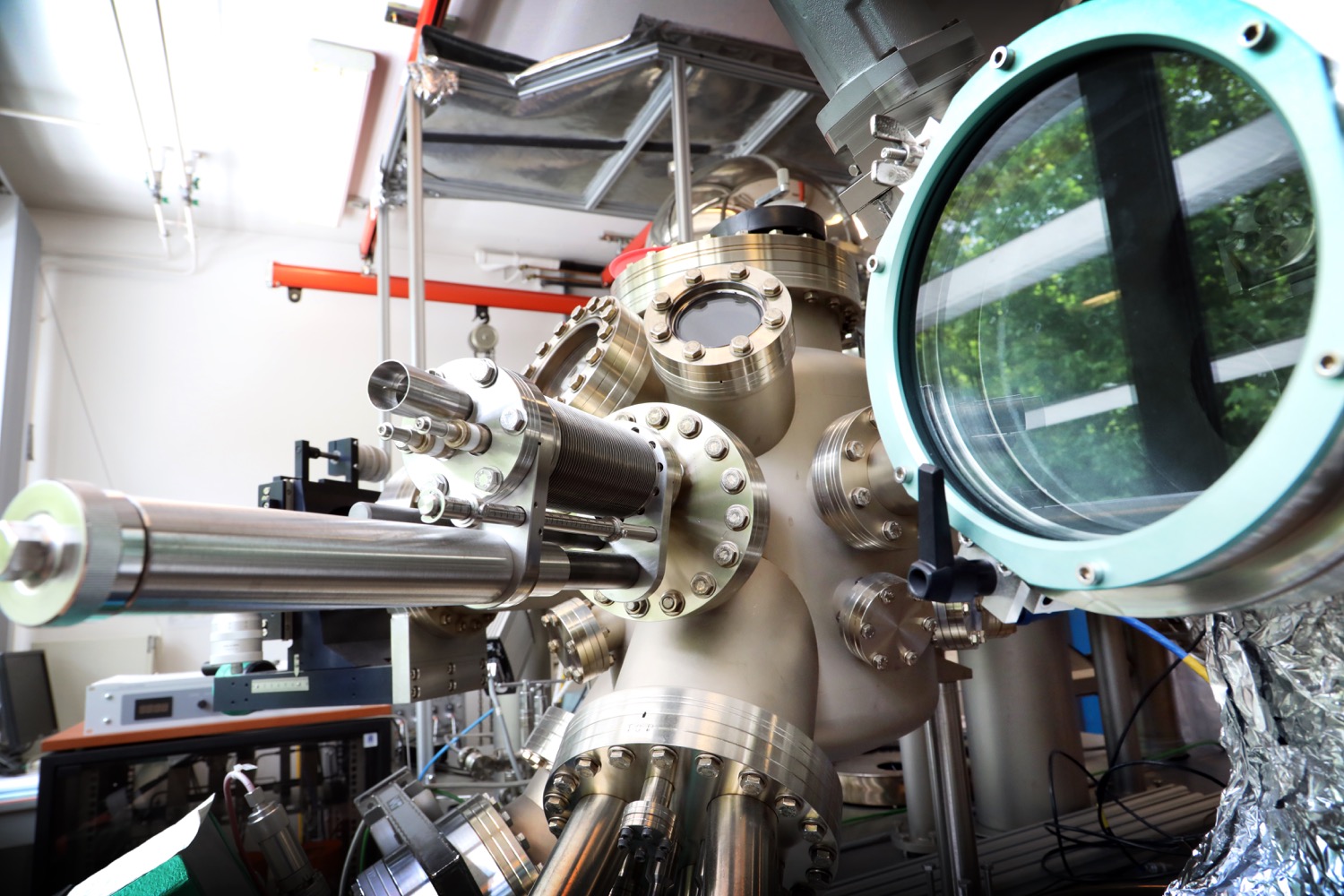
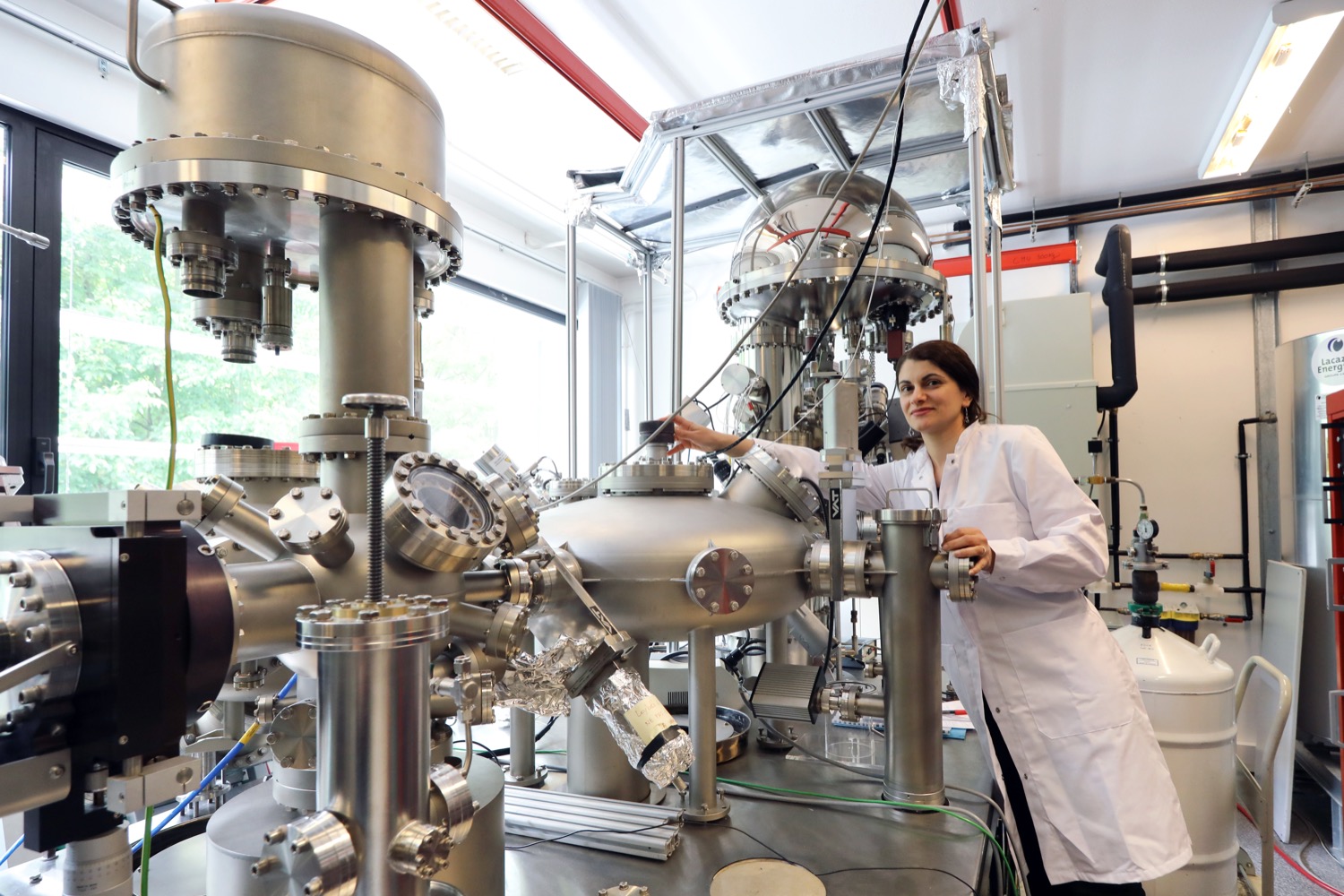
Kratos AXIS SUPRA+ XPS Spectrometer
What is it for ?
- Identification and quantification of chemical elements present on the surface of materials
- Investigation of chemical states and atomic bonding
- Characterization of thin layers, coatings, and films
- Analysis of surface contamination and oxidation
- Investigation of chemical modifications induced by thermal or ion treatments
Fields of application:
- Catalysis, polymers (functionalization, packaging, plastics, resins, etc.)
- Metallurgy (corrosion, oxidation, etc.)
- Aerospace/automotive (adhesion, coatings, etc.)
- Energy (batteries, biomass, etc.)
- Microelectronics, biology, nanomaterials, semiconductors, etc.
- Surface physics and chemistry
- etc.
Available Measurement Types
- General XPS survey spectrum allows:
- identification of all elements (except H and He)
- determination of the atomic concentrations of the elements, with a detection limit of 0.1%.
- High-resolution XPS spectra allow determination of:
- the nature of chemical bonds and the local environment of atoms
- the oxidation state of the elements.
- Angular-resolved XPS (ARXPS) and/or ion sputtering allow:
- identification of surface segregation
- depth profiling.
Traitements in-situ possibles
- Argon ion (Ar⁺) sputtering: we have an ion gun that allows sample sputtering for depth profiling or surface cleaning.
- Thermal treatment: a sample heating system is available, allowing temperatures of up to 850°C under UHV or controlled-atmosphere conditions.
- Residual gas analysis: performed using a mass spectrometer.
- Gas adsorption: we are equipped with a gas dosing line that allows gas adsorption experiments up to atmospheric pressure.
Autres équipements
- Dedicated transport case for samples that may react with air. It allows air-sensitive samples prepared in a glovebox under an argon atmosphere to be transferred and subsequently analyzed by XPS without further exposure to ambient atmosphere.