Select Page
Accueil » The thematic axes » CMH Carbon and hybrid materials Equipments

Equipments

Equipment

The CMH team has access to a comprehensive set of synthesis and characterization instruments tailored to advanced carbon and hybrid materials research, including:

Synthesis equipment
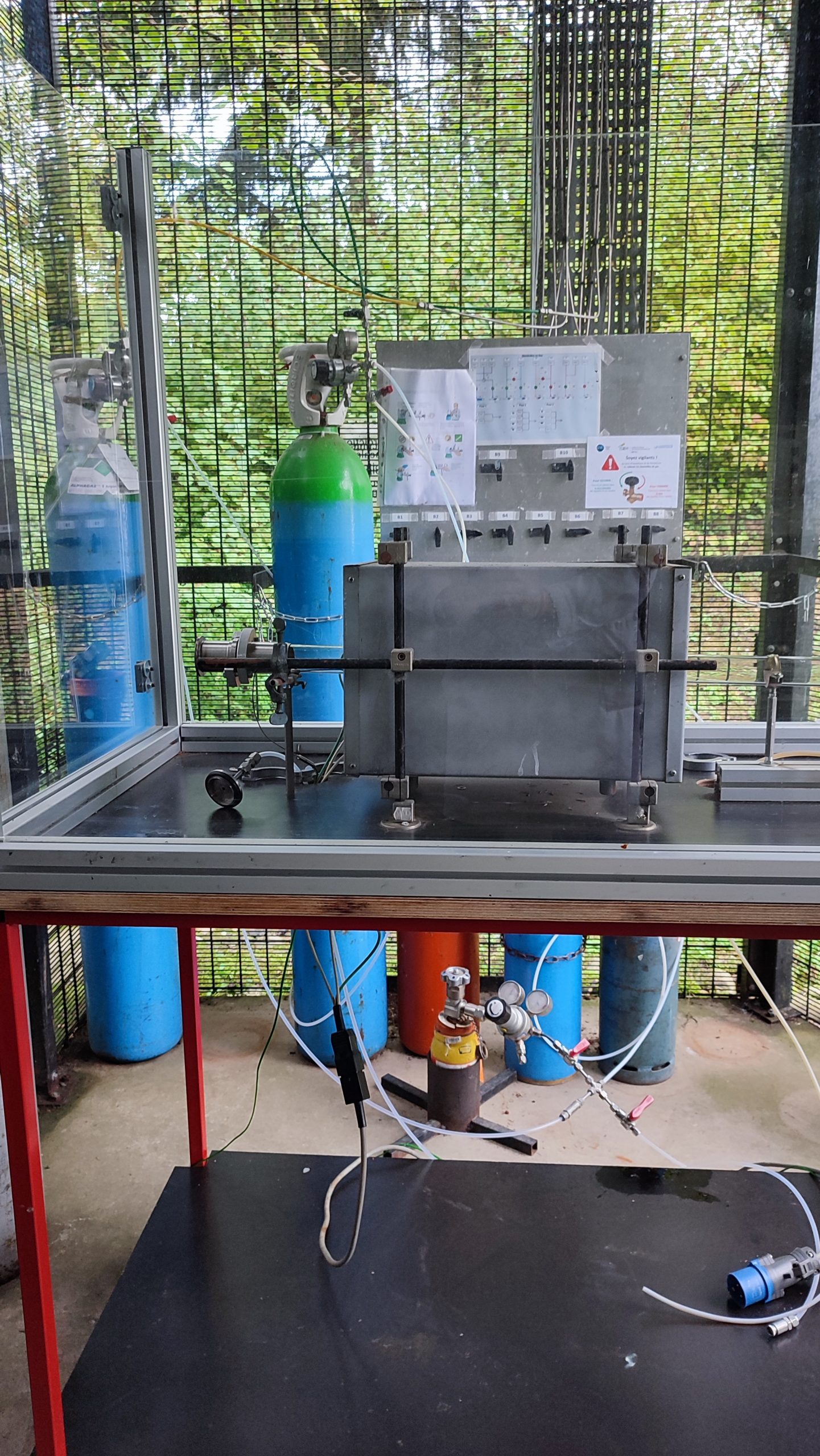
Automated Thermal Treatment and CVD Furnaces

Uses: Chemical Vapor Deposition (CVD), Chemical Vapor Infiltration (CVI), oxidations, reductions, activations, carbonizations, calcinations, nitrurations.

Features: Quartz tubes; three furnaces reaching up to 950 °C; gas flows: Ar, air, O₂, NH₃, H₂, H₂S, C₃H₆.

Model: Custom furnaces built at IS2M, with computerized control by the CMH team (temperature and gas flow).

Equipment Responsible: Bénédicte Réty.

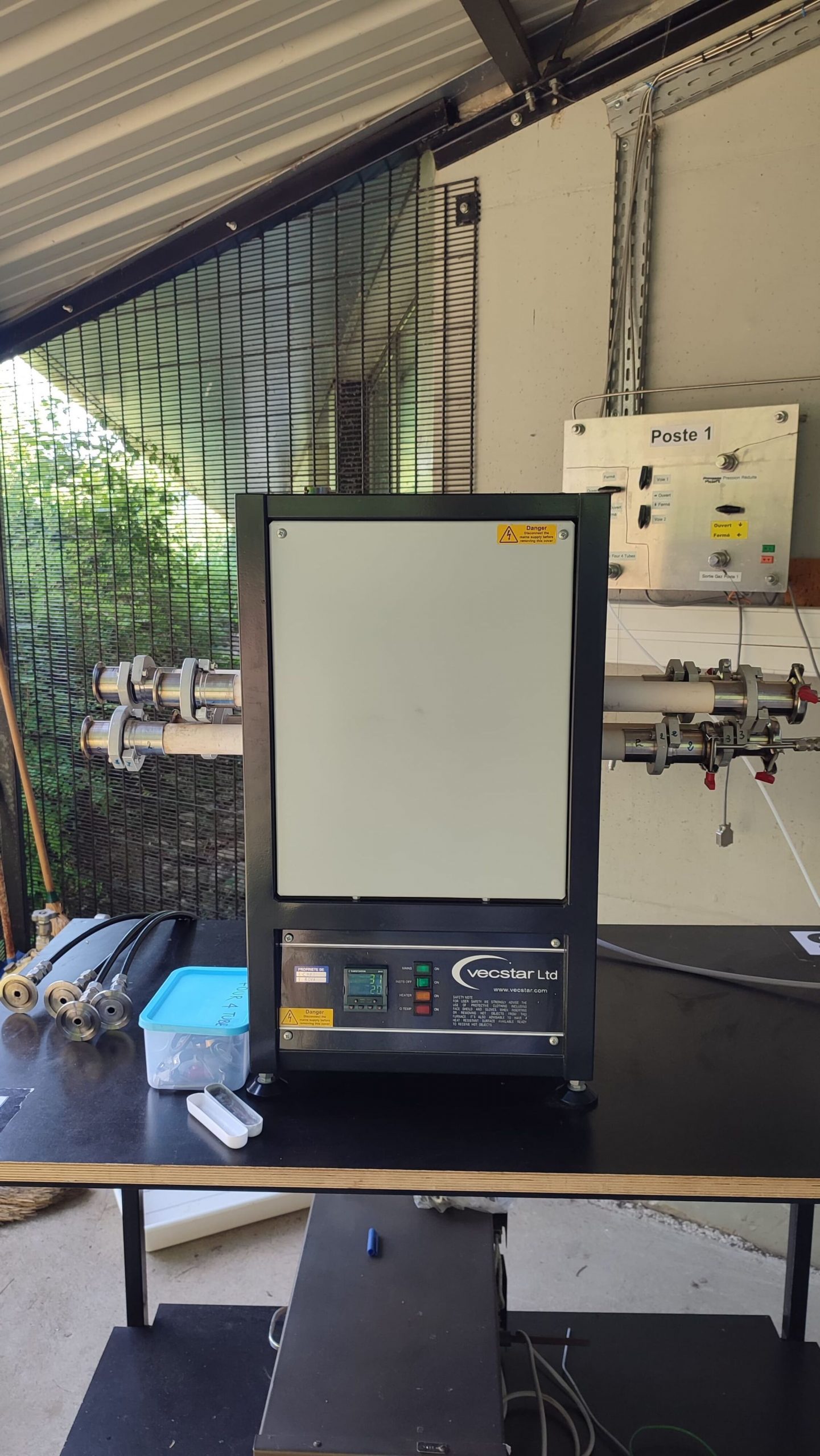
Gas-Flow Thermal Treatment Furnace (Tmax = 1000 °C)
Uses: Carbonizations and calcinations.
Features: Four alumina tubes; maximum temperature 1000 °C; Ar/air gas flow.
Model: Vecstar VTF3.
Equipment Responsible: Adrian Beda.
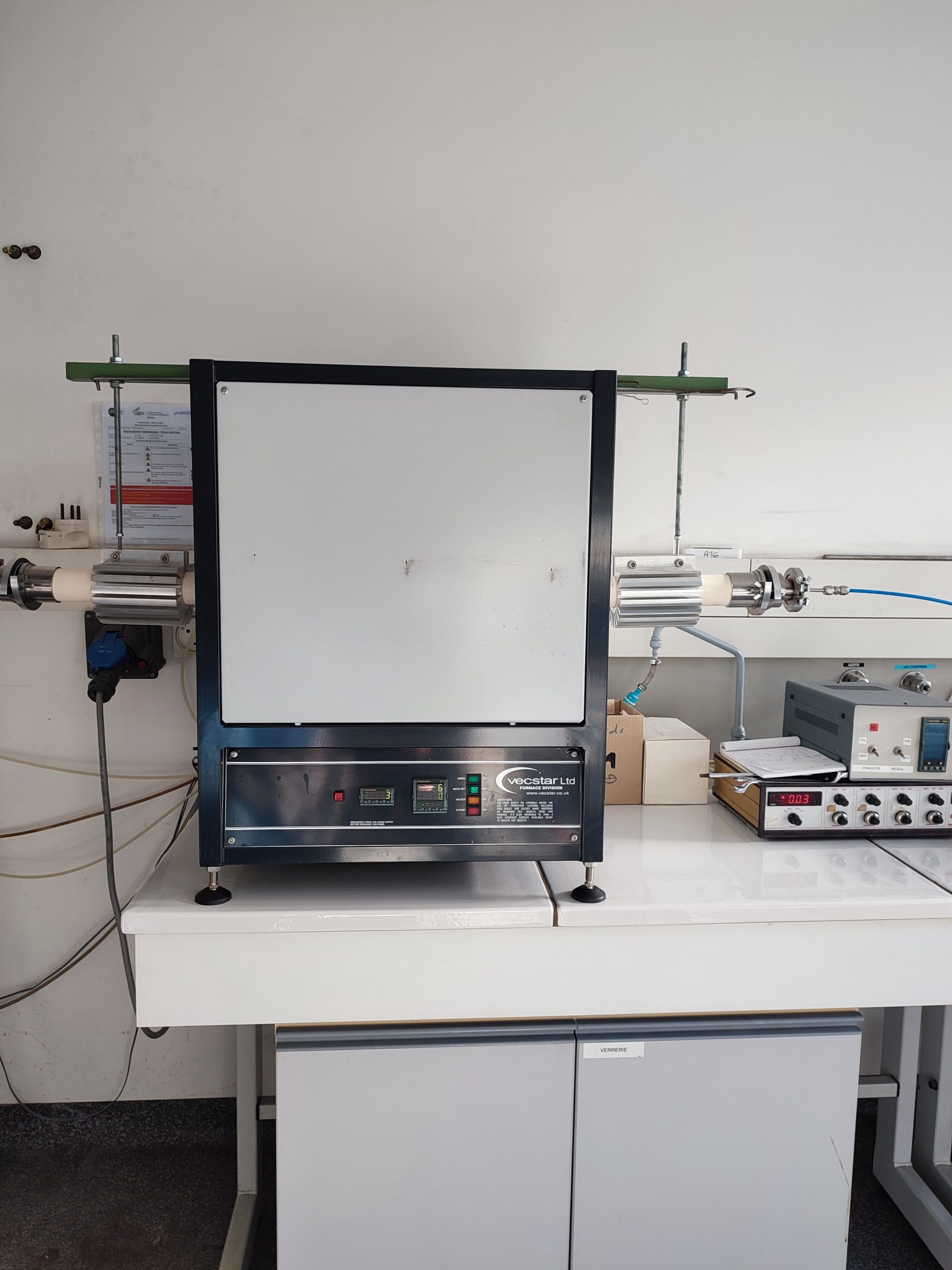
Gas-Flow Thermal Treatment Furnaces (Tmax = 1600 °C)
Uses: Carbonizations and calcinations.
Features: Alumina tube; max temperature 1500 °C / 1600 °C; Ar/air gas flow.
Models: Carbolite tubular furnace STF/TZF and Vecstar electric chamber furnace.
Equipment Responsible: Adrian Beda.
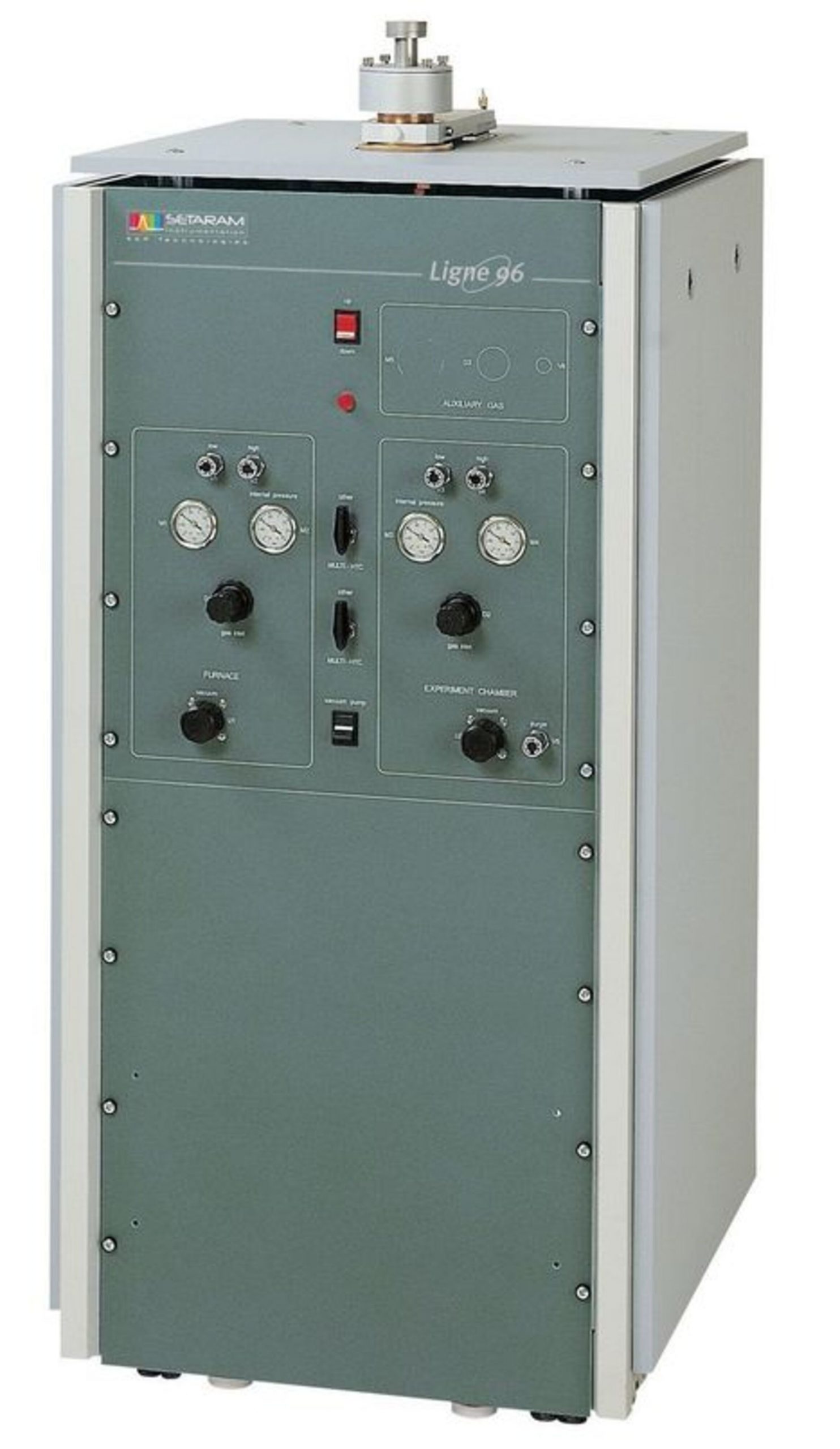
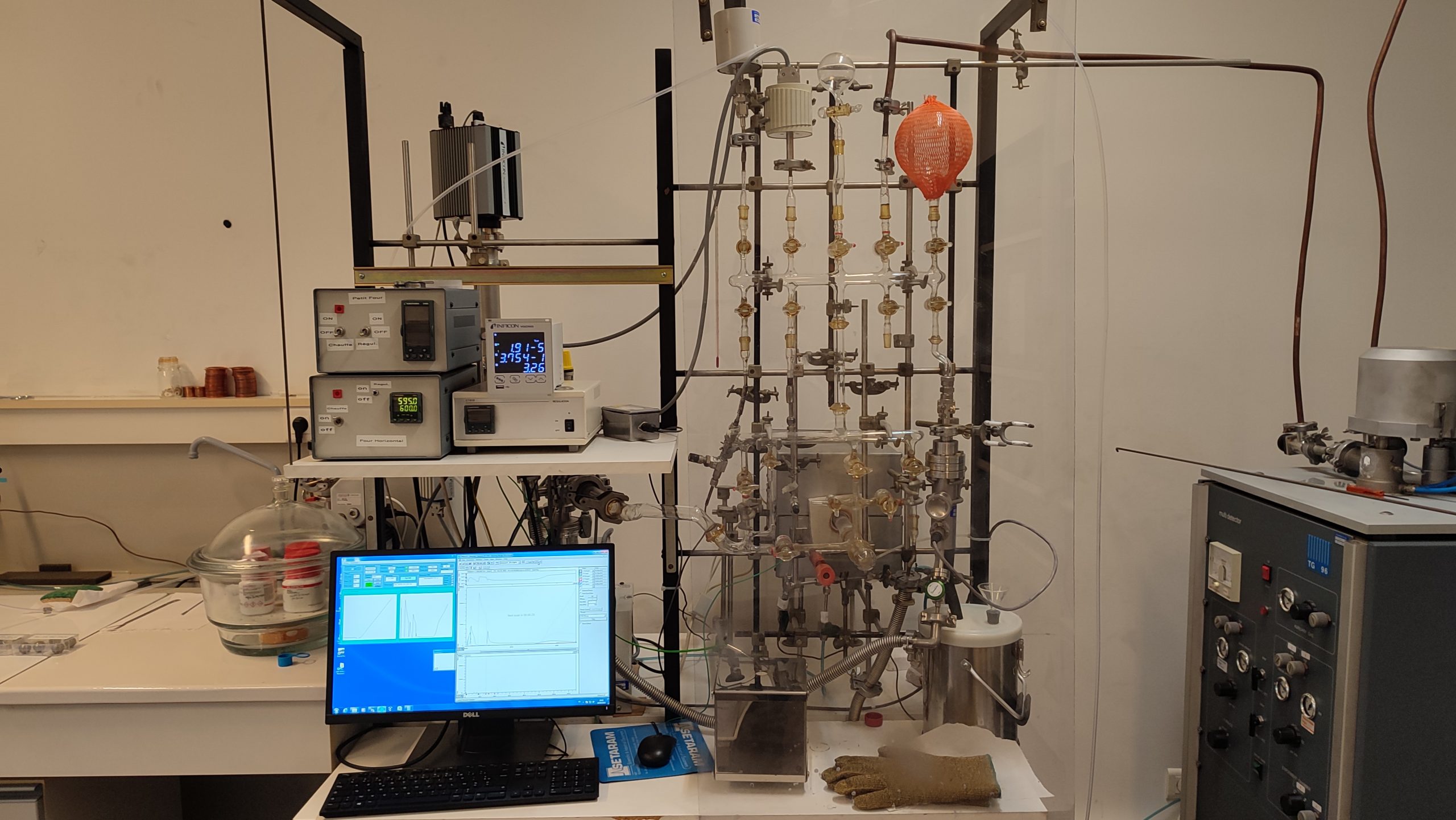
High Temperature Thermal Treatment Furnace
Uses: High-temperature heat treatments with real-time mass loss measurement via thermogravimetric balance (TG).
Features: Tubes in glassy carbon/alumina; max temperature 2000 °C / 1600 °C depending on tube; Ar flow or under vacuum.
Model: Setaram – TG96 furnace.
Equipment Responsible: Bénédicte Réty.
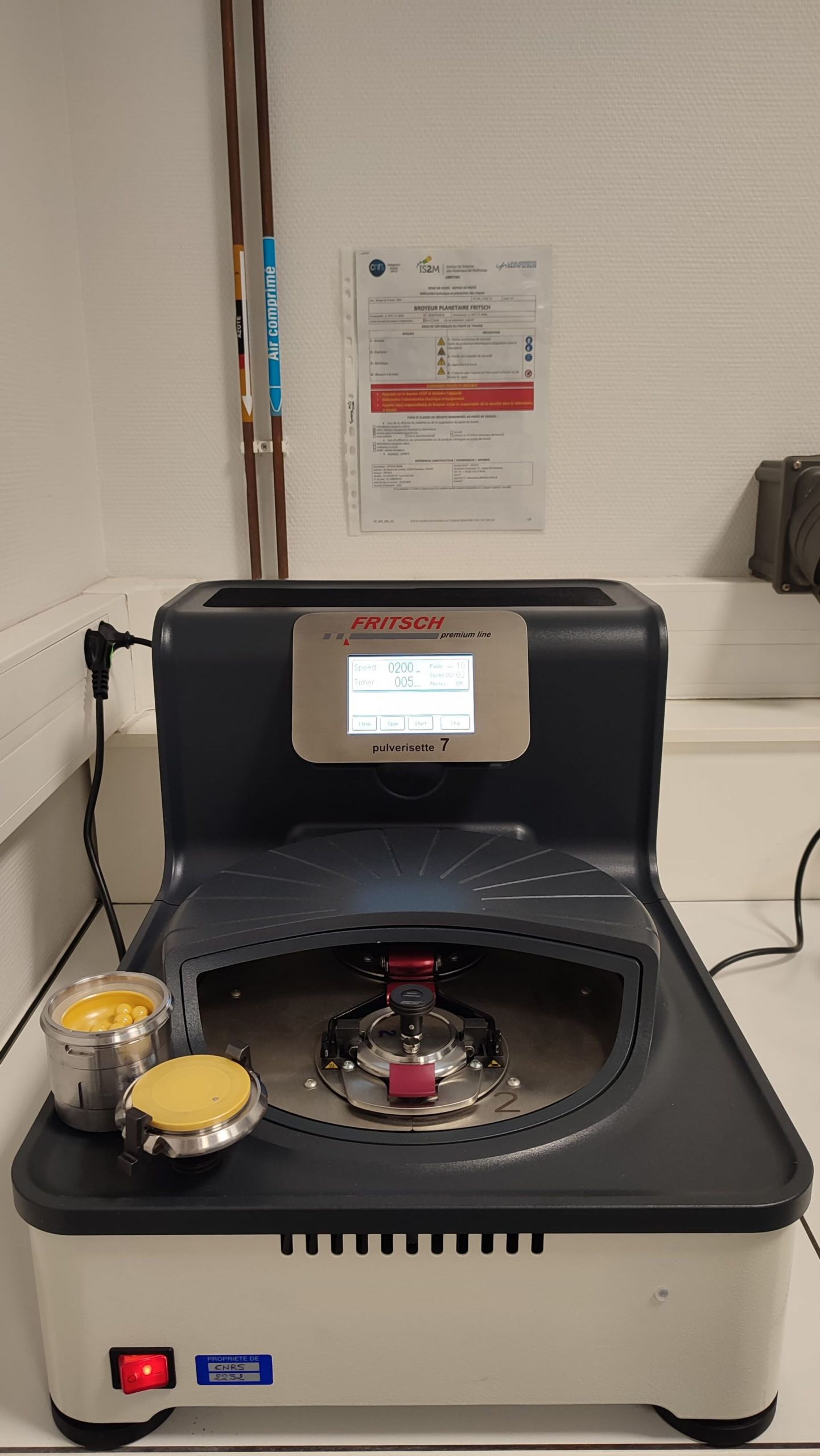
Planetary Mill Under Controlled Atmosphere (2 units)
Uses: Dry/wet grinding under inert gas, material activations, mechanosynthesis, study of materials under mechanical stress.
 
Features: Jars and balls made of zirconium/steel/tungsten carbide/agate; maximum speed 1100 rpm; jar capacity 2×20 mL (max 3g).
 
Models: Fritsch – Pulverisette 7 Premium Line and Pulverisette 6.
 
Equipment Responsible: Adrian Beda.
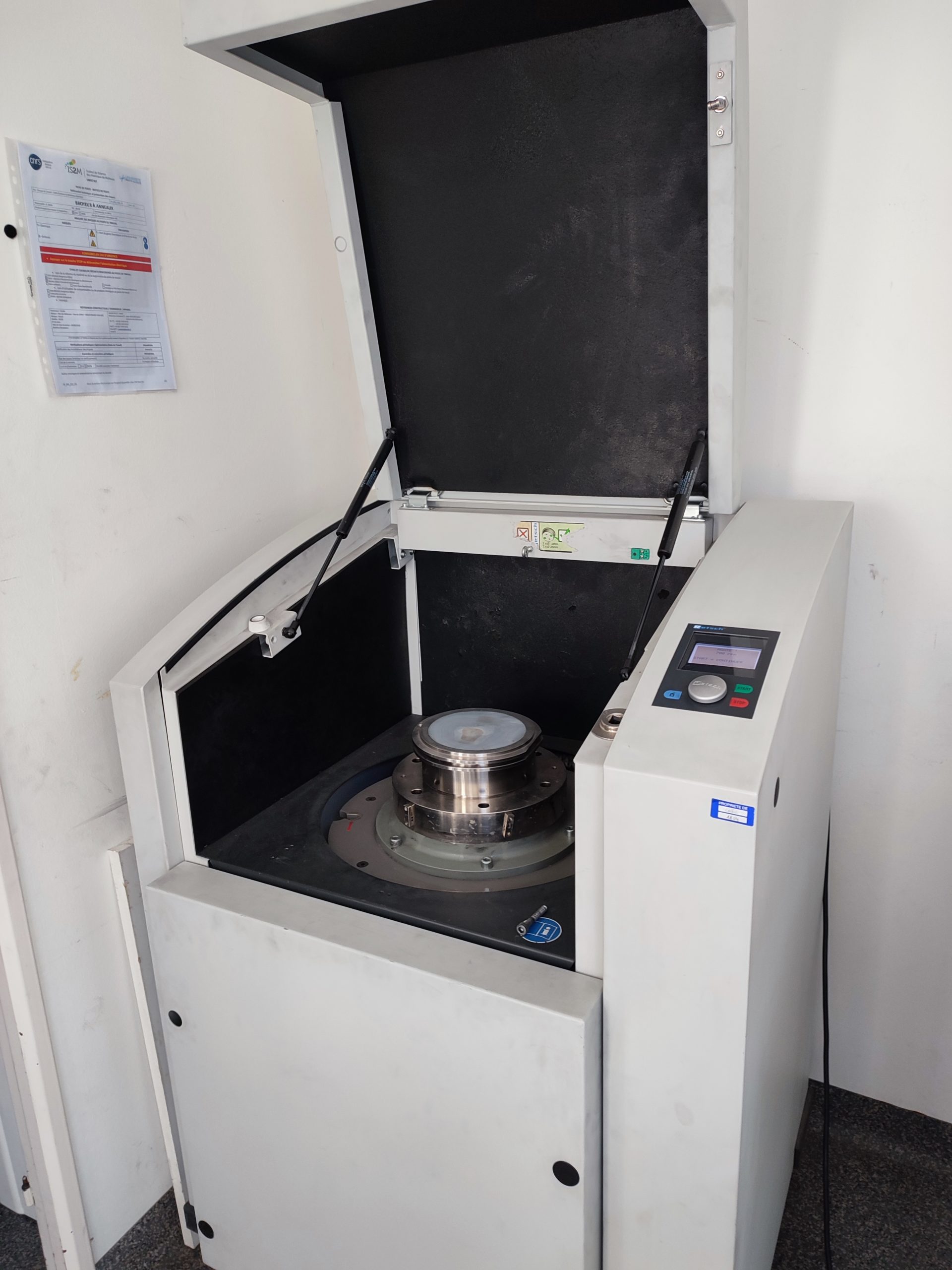
Ring Mill Under Controlled Atmosphere
Uses: Grinding and material activations.
Features: Thermostated; jars, rings, and rollers in steel/agate; 700 rpm; capacity 50 g.
Model: Retsch – RS200.
Equipment Responsible: Adrian Beda.
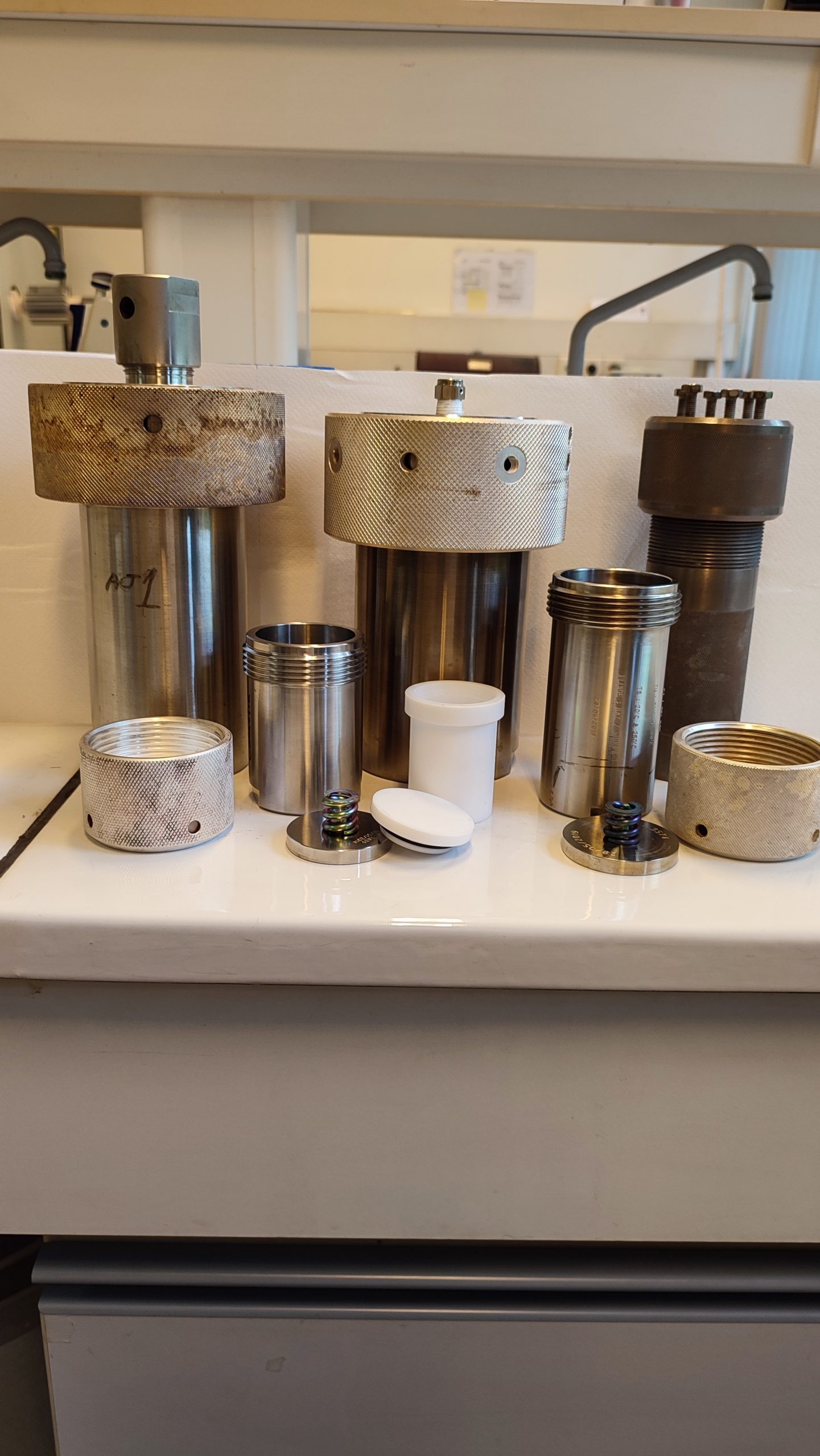
Autoclaves
Uses: Hydrothermal syntheses.
Features: Volumes of 500 mL / 100 mL / 50 mL; pressures 100–160 bars; up to 250 °C.
Model: Top Industrie.
Equipment Responsible: Adrian Beda.
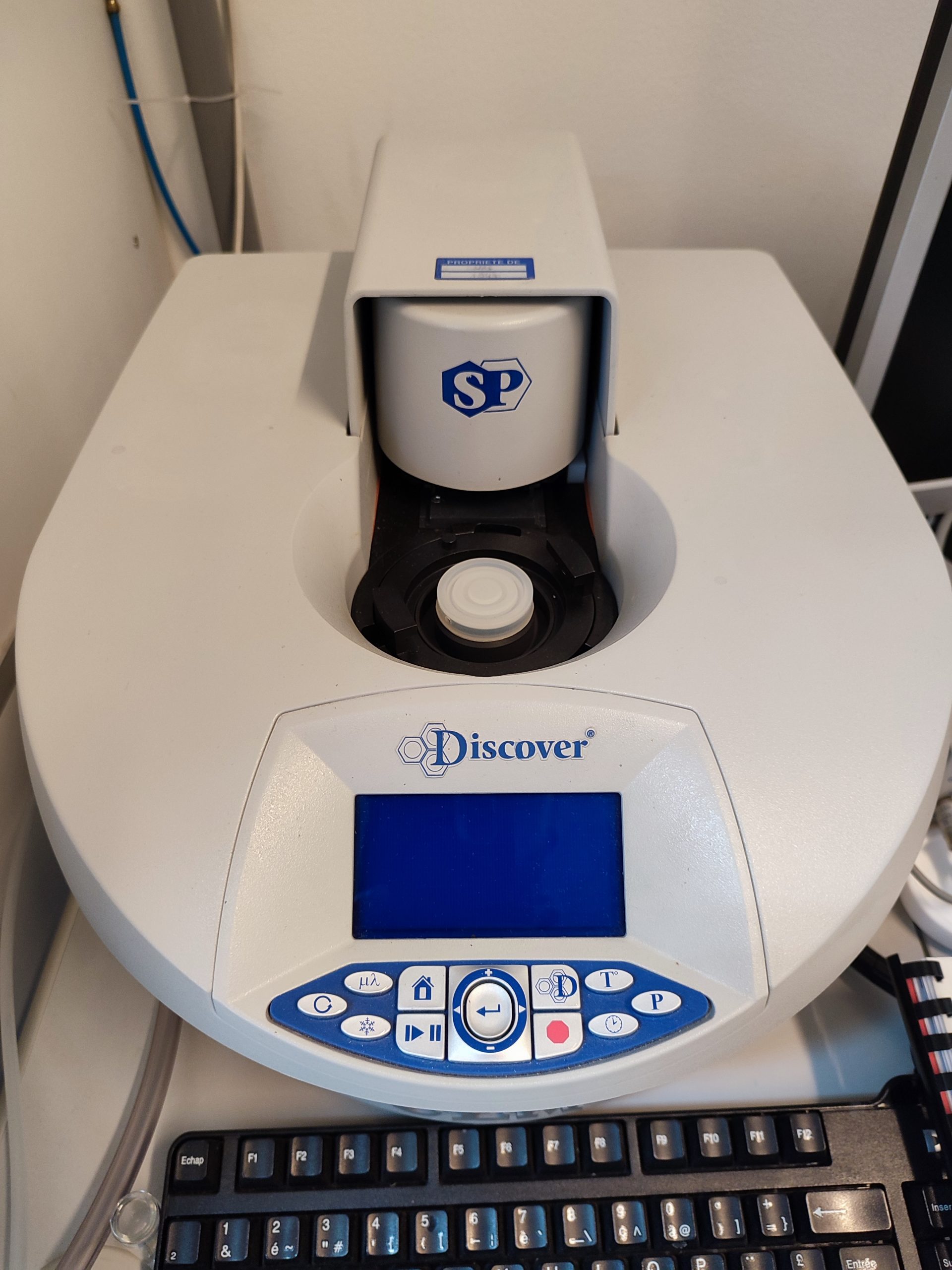
Microwave Reactor
Uses: Rapid material synthesis in open or closed vessels with controlled temperature and pressure.
Features: 300 W; single reactor with open 100 mL or closed 10 mL, 35 mL, or 80 mL vessels.
Model: CEM – Discover SP.
Equipment Responsible: Jean-Marc Le Meins.

Characterization

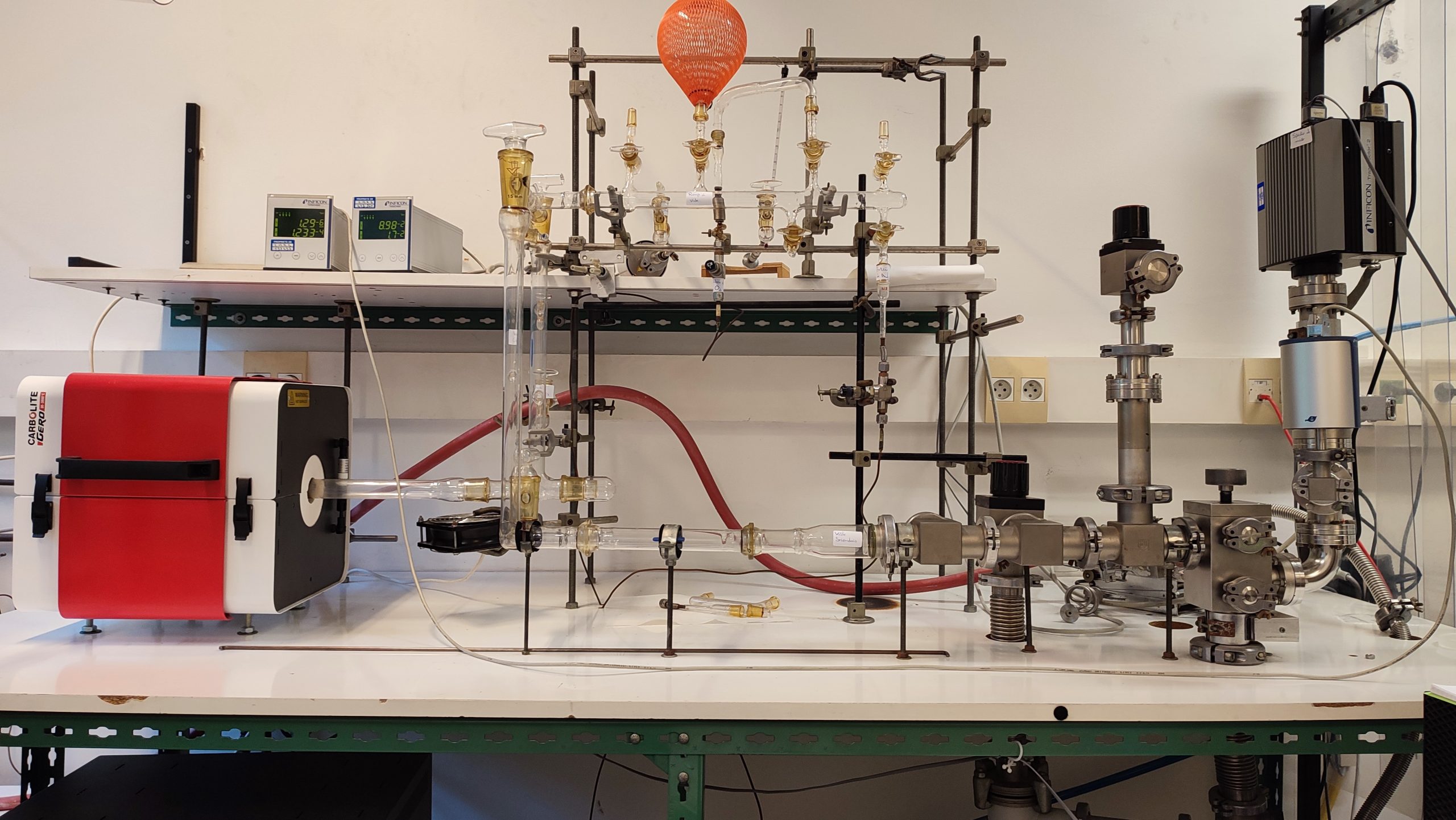
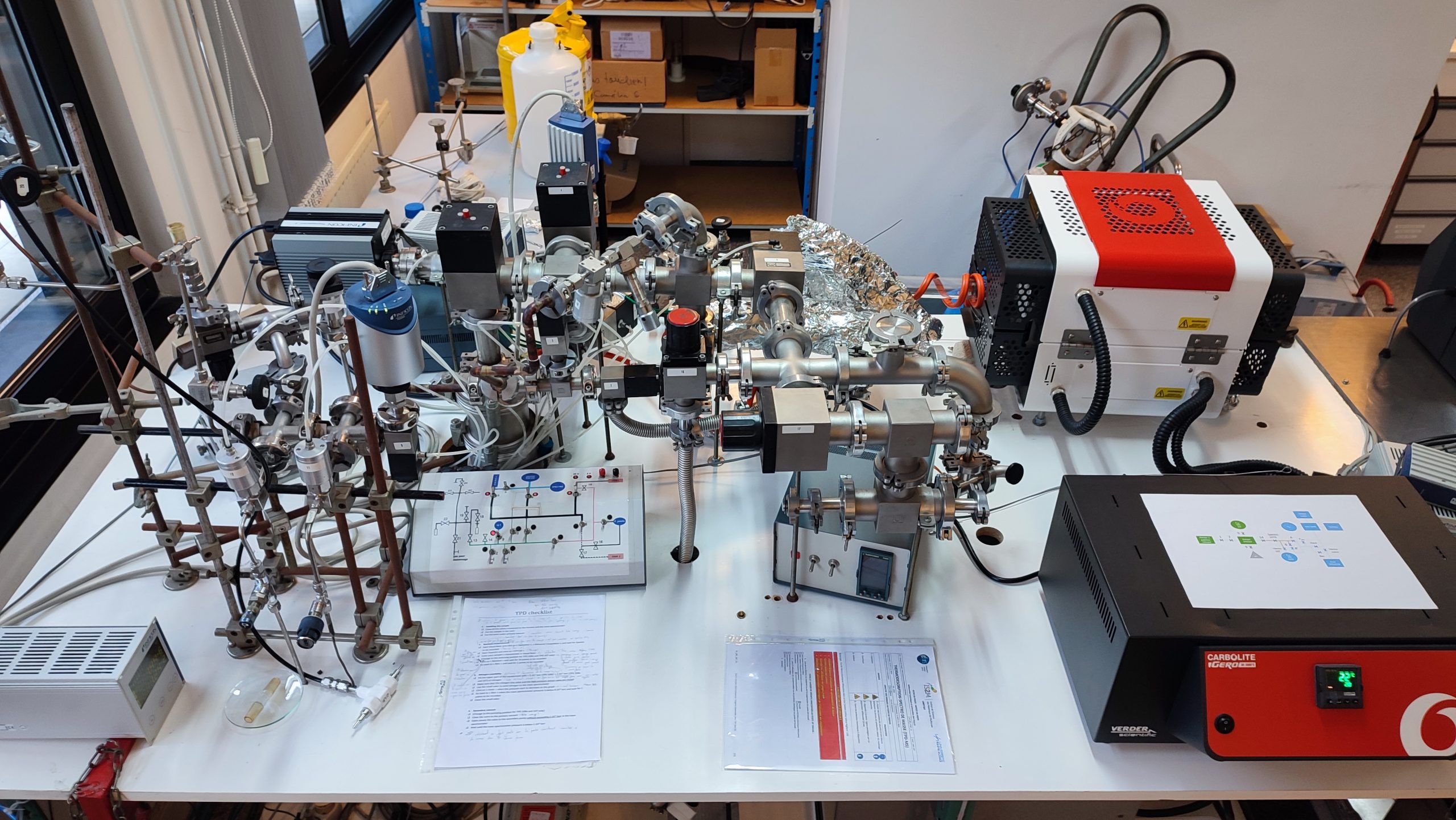
TPD-MS (Temperature-Programmed Desorption Mass Spectrometry)
Purpose: Qualitative and quantitative analysis of molecules desorbed as a function of temperature using mass spectrometry.
Uses:
  • Surface functional group analysis
  • Study of interactions between adsorbed molecules and the support material
  • Measurement of active site concentration
  • Determination of the type and quantity of adsorbed species
 
Features: Measurements under secondary vacuum; maximum temperature 950 °C; quartz tube and sample holder.
 
Model: Instrument developed by the CMH team.
 
Equipment Responsible: Bénédicte Réty.
TPD-MS with Cryogenic Trap

Purpose: A variant of TPD-MS that includes a cryogenic trap to capture desorbed species at low temperatures before analysis.

Equipment Responsible: Bénédicte Réty.

High-Temperature TPD-MS

Purpose: A high-temperature version of the TPD-MS method, likely extending the desorption analysis to higher temperatures than the basic TPD-MS setup.

Equipment Responsible: Bénédicte Réty.

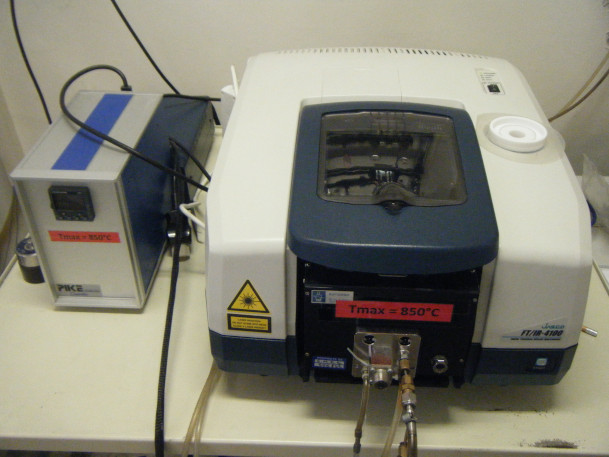
FTIR Spectrometer (Fourier-Transform Infrared Spectrometer)
Purpose: Identification and characterization of chemical structures via infrared absorption spectra.
Features:
  • Spectral range 4000 – 750 cm⁻¹
  • Measurements under controlled atmosphere and temperature
 
Model: Jasco FT-IR4100 with MCT detector; temperature controller by PIKE Technologies.
Equipment Responsible: Adrian Beda.
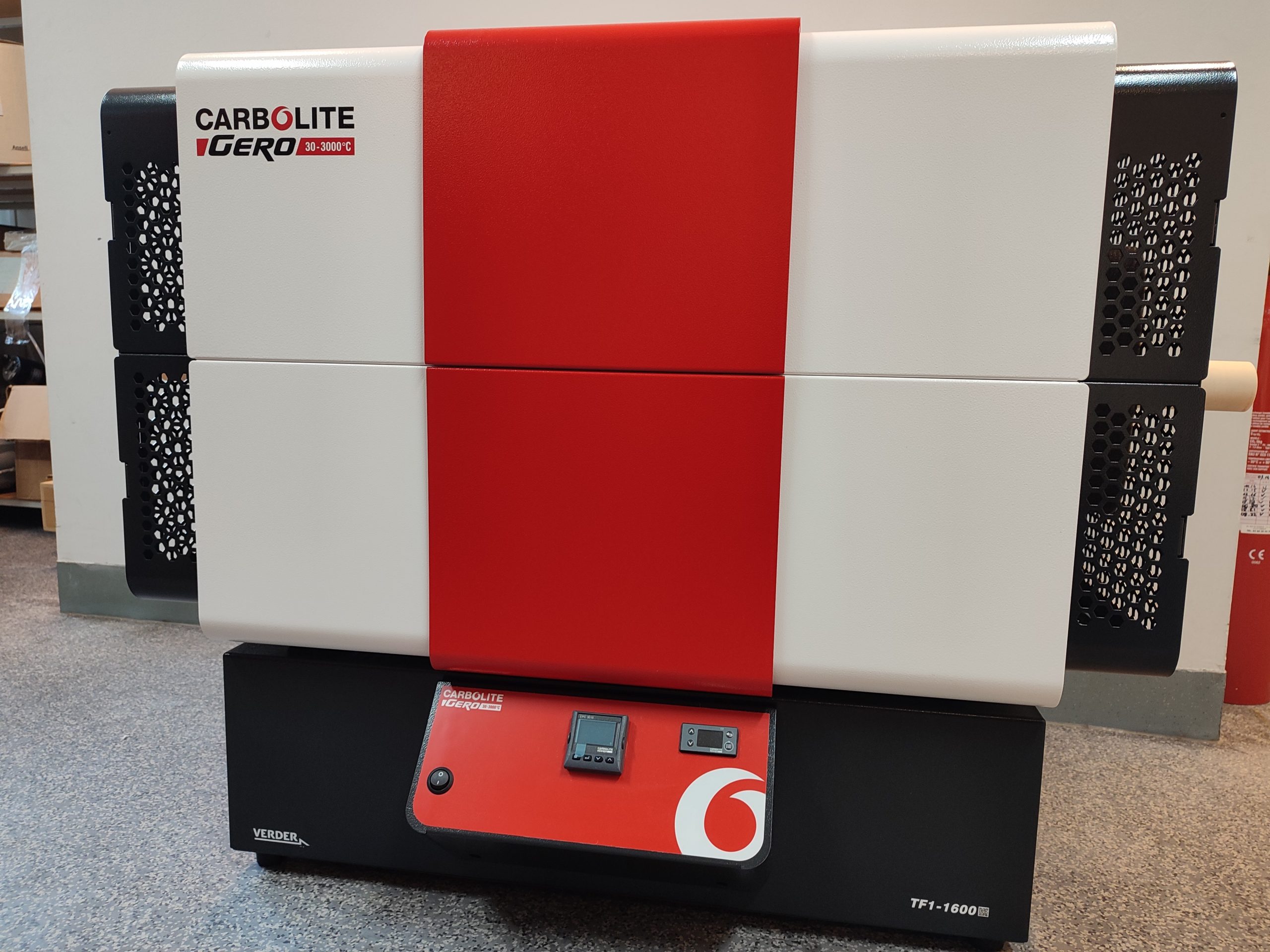
High-Temperature Gas-Flow Thermal Furnace (Tmax = 1600 °C)
Uses: High-temperature thermal treatments under gas flow (for carbon material development research, e.g., for Na-ion/K-ion battery materials).
Details: This furnace was acquired (2025) thanks to a donation from the Roger Pellenc Foundation to support research activities. Its purchase enables the continuation of research and development of carbon materials for advanced battery applications.
Context: The Roger Pellenc Foundation’s broader mission is to support French scientific knowledge in renewable energy and new-generation batteries.
Funding / Note: Sponsored by the Roger Pellenc Foundation.

Applications

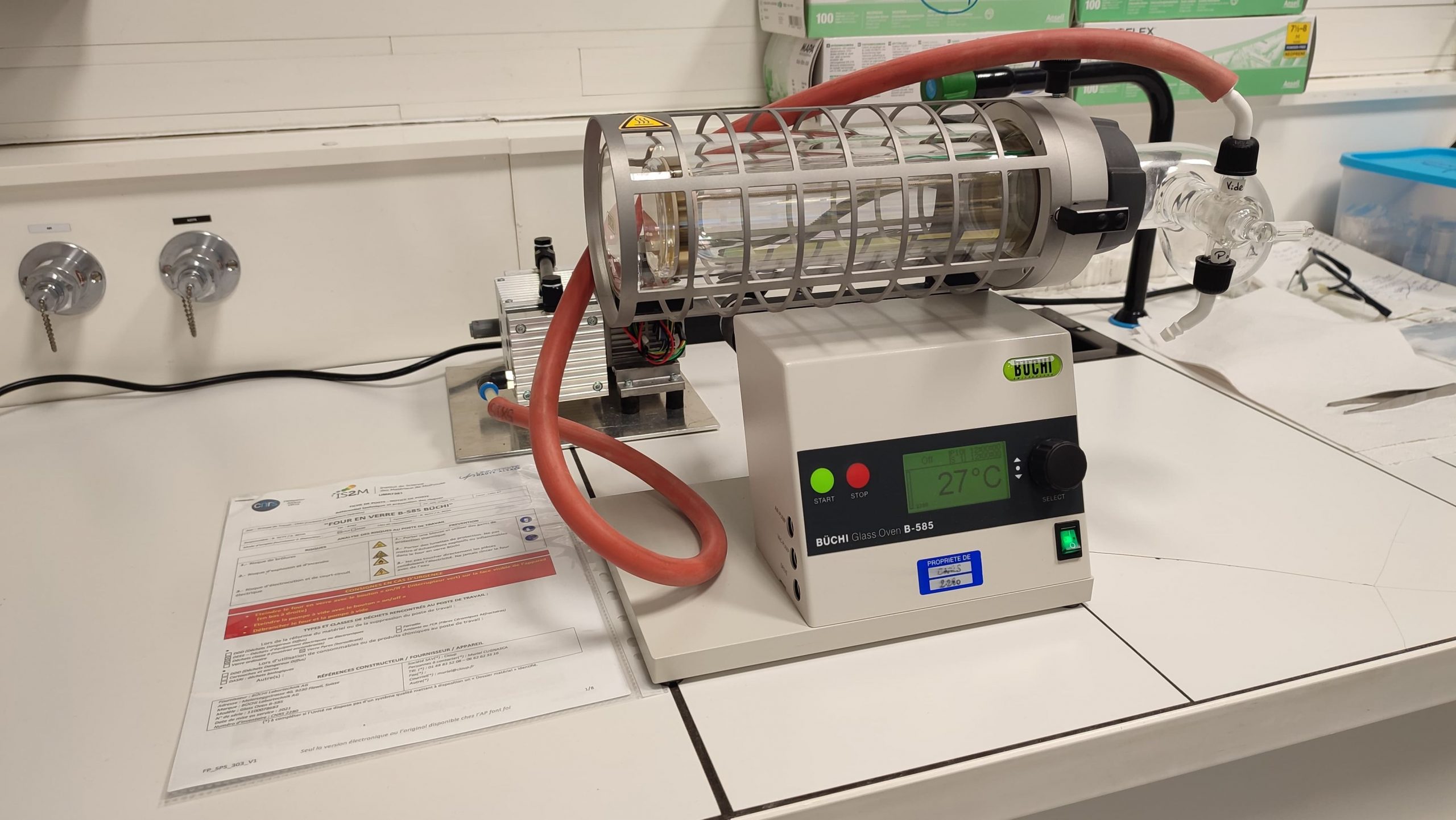
BUCHI Glass Oven
Purpose: Primary vacuum drying of samples.
Key Features: Programmable heating; maximum temperature 300 °C; adjustable angle between 0° – 90°.
Model: BUCHI B-585 drying oven.
Equipment Responsible: Adrian Beda.
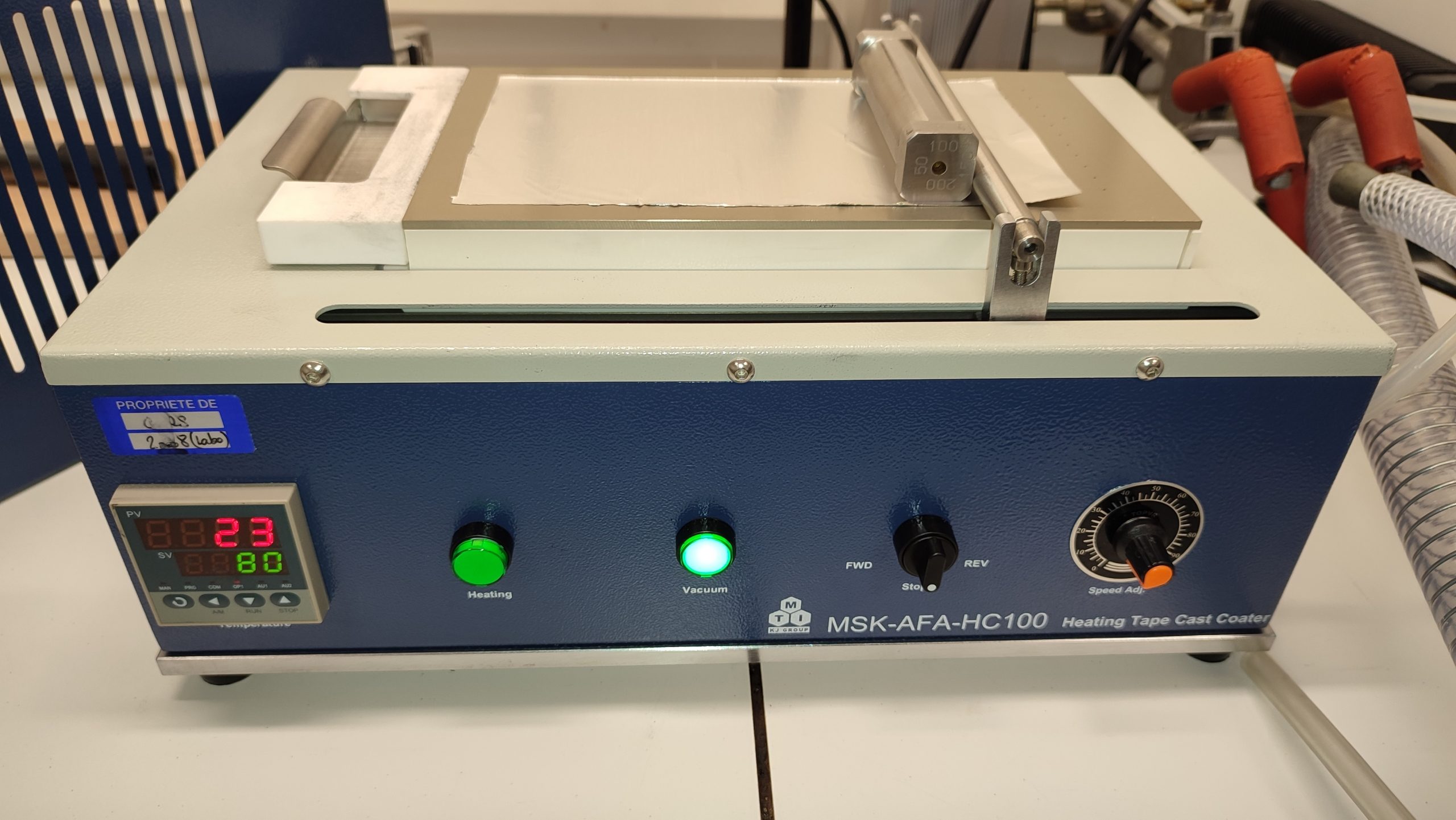
Automatic Coating Device
Purpose: Preparation of coatings and carbon-based electrodes.
Key Features: Vacuum plate; heated up to 100 °C; adjustable thickness spacing 5 – 20 µm (5 – 10 – 15 – 20 µm).
Model: MSK-AFA-HC100.
 
Responsible: Adrian Beda.
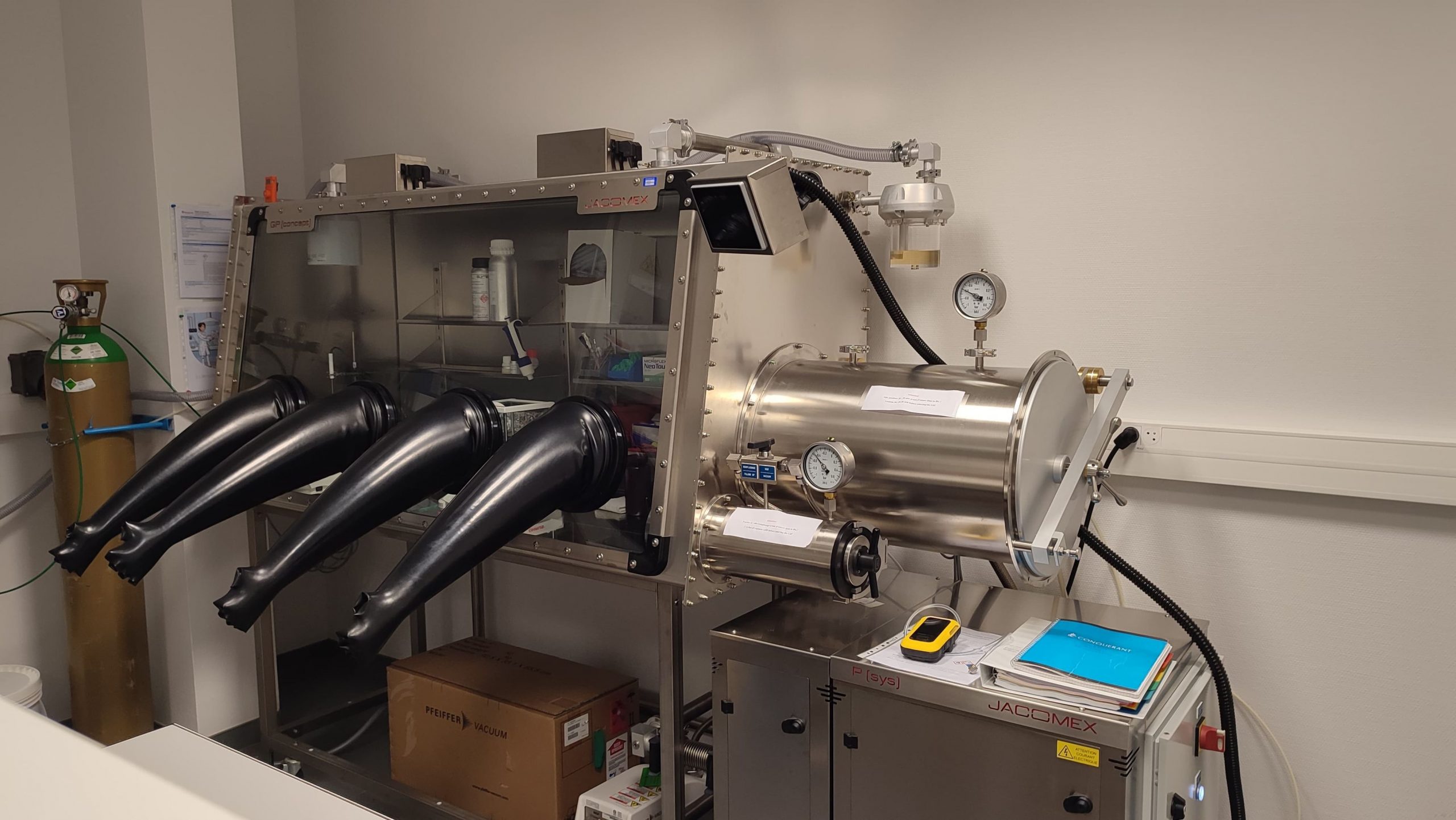
Glove Boxes (×2)

Purpose:

  • Assembly of electrochemical cells under controlled atmosphere.
  • Storage and preparation of materials under inert atmosphere.

Key Features:

  • Work under positive pressure with Argon
  • Purification unit achieving < 1 ppm O₂/H₂O
  • Two or four glove ports depending on the unit

Models:

  • Jacomex GP(ConcEquipment Responsible:ept)-T4
  • Jacomex GPT2

Equipment Responsible: Bénédicte Réty / Adrian Beda.
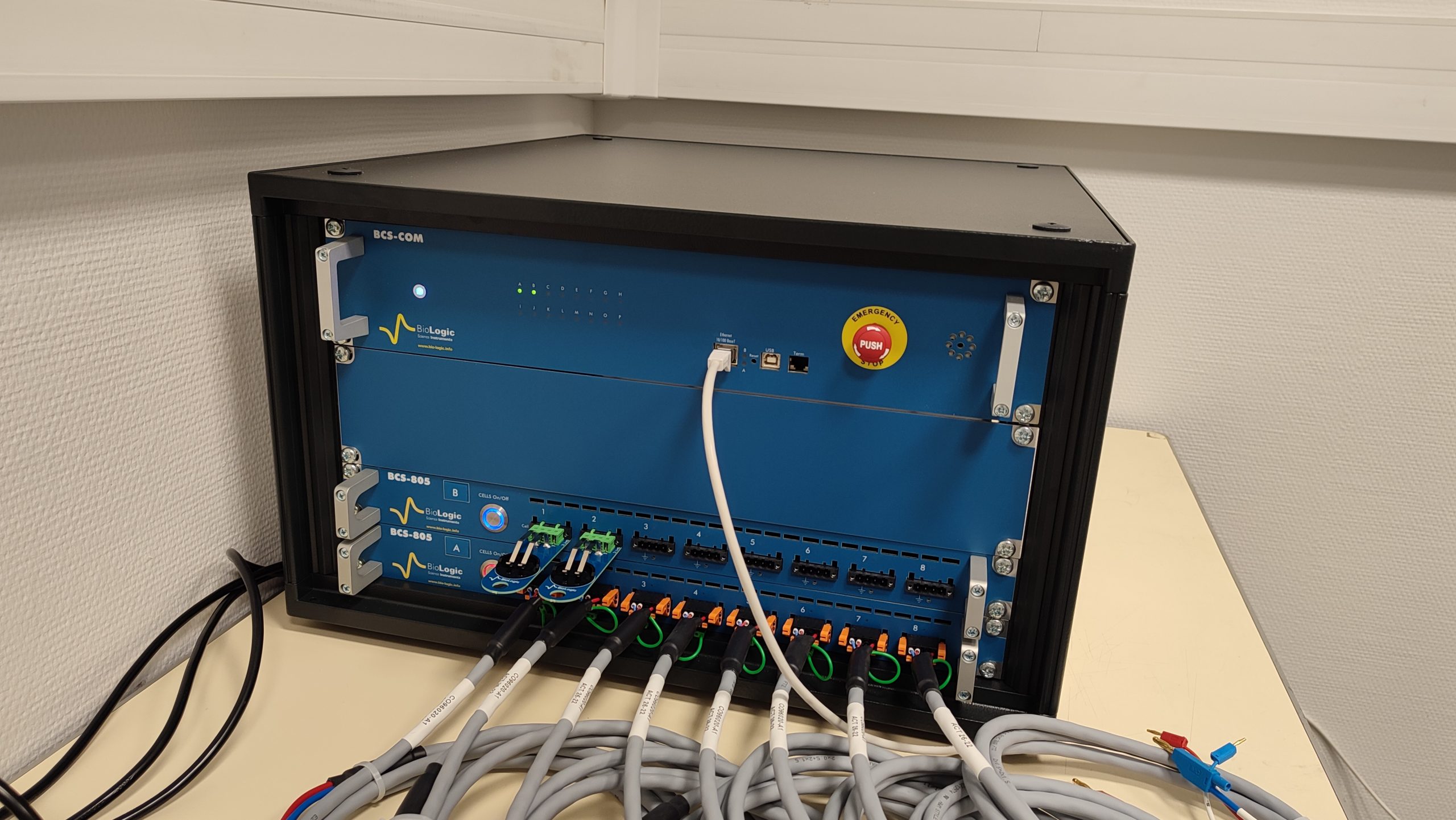
Battery Cycler
Purpose: Battery testing — galvanostatic cycling.
Key Features:
  • 16 channels
  • Voltage range: 0 V to 10 V
  • Maximum current: ±150 mA
Model: BioLogic BCS-805.
Equipment Responsible: Adrian Beda.
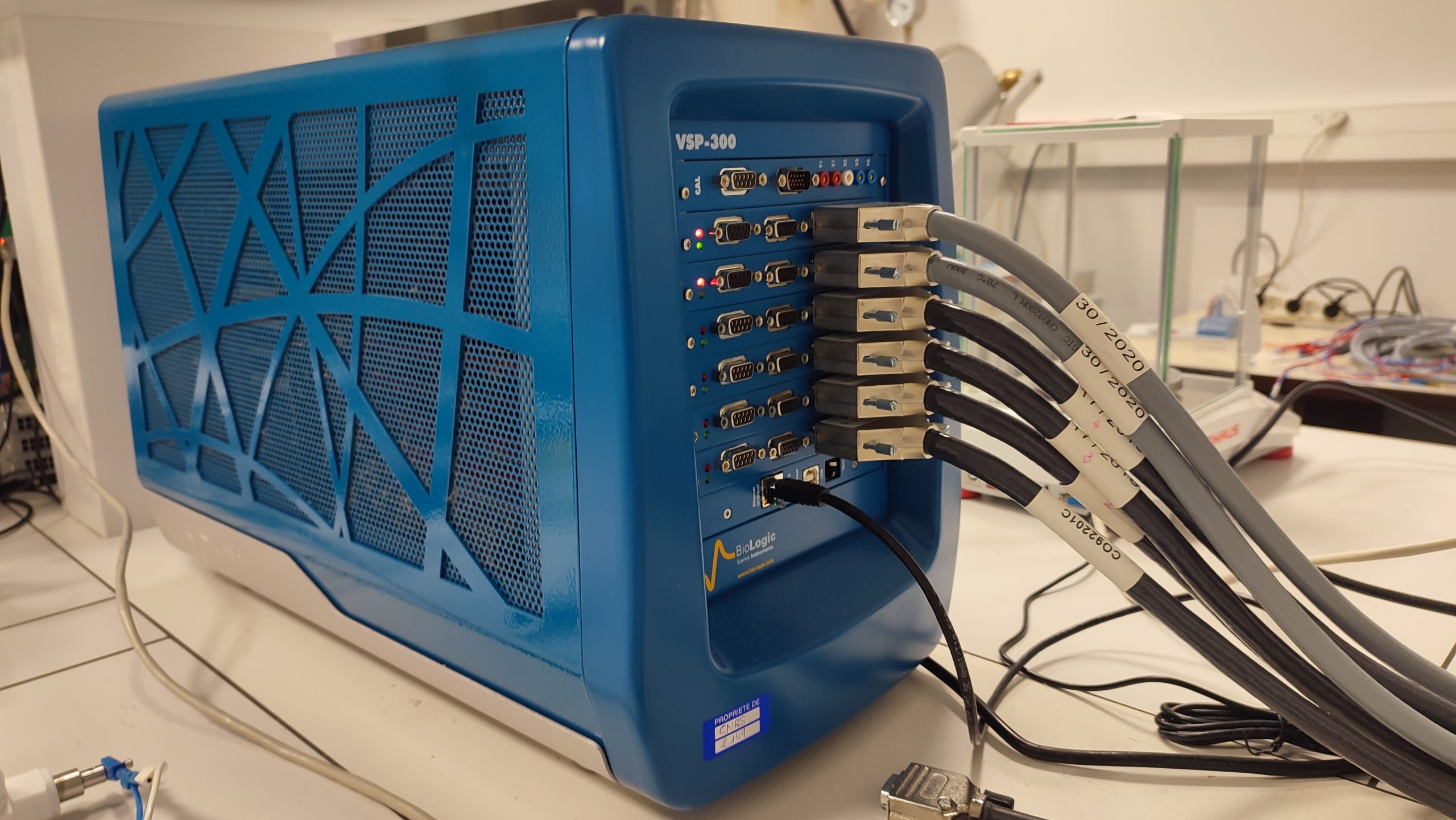
Multichannel Potentiostat / Galvanostat
Purpose:
  • Cyclic voltammetry
  • Galvanostatic cycling
  • Electrochemical impedance spectroscopy
Key Features:
  • 6 channels
  • Support for 2- and 3-electrode setups
  • Maximum current: 40 A
Model: BioLogic Science Instruments VSP300.
Equipment Responsible: Bénédicte Réty.
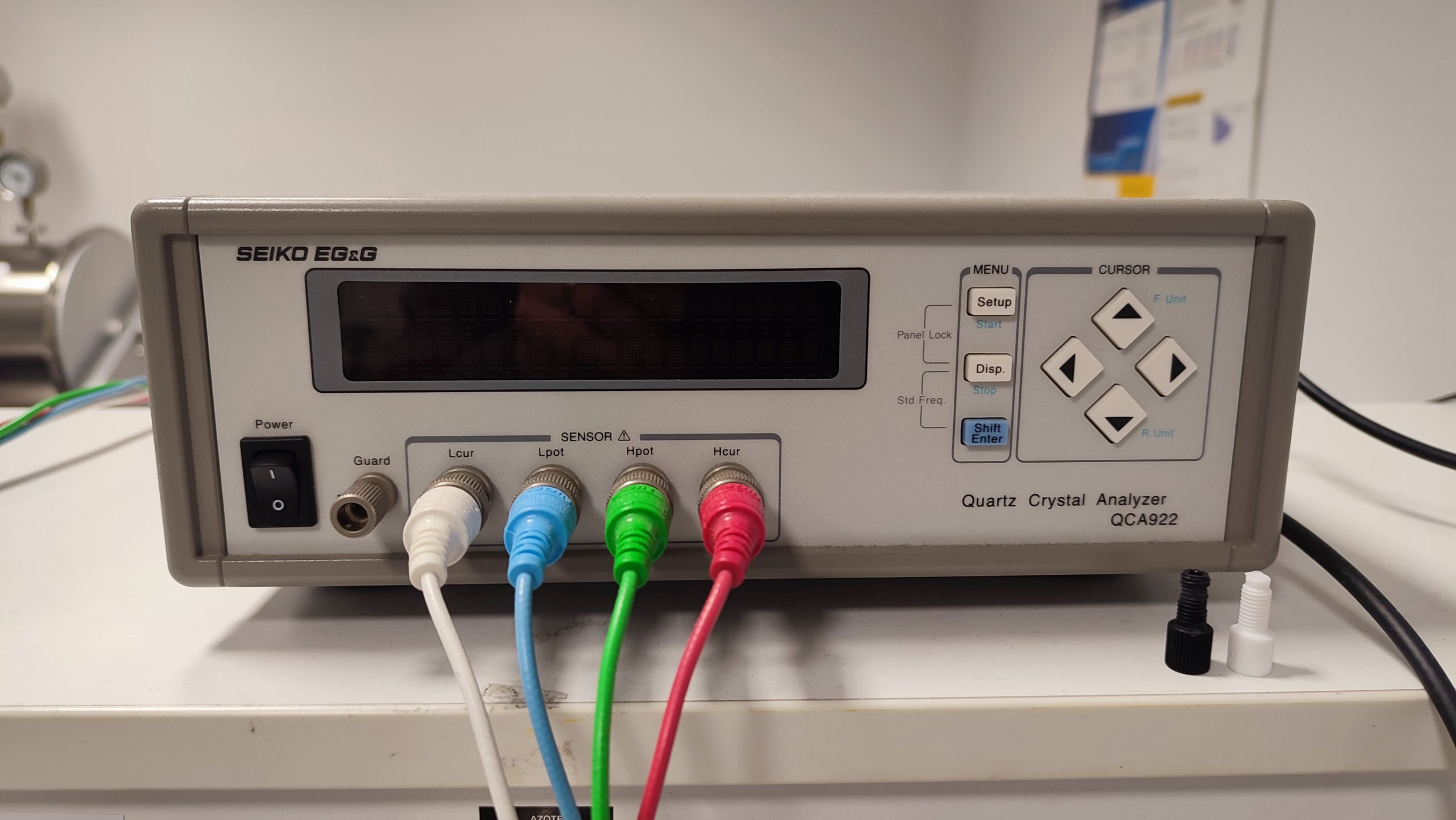
Quartz Microbalance
Purpose: Used with a potentiostat/galvanostat to analyze electrochemical reaction mechanisms (e.g., mass changes at electrodes).
 
Key Features:
  • 1 channel
  • 9 MHz crystal resonator.
Model: SEIKO EG&G QCA922.
Equipment Responsible: Bénédicte Réty.

IS2M

Bâtiment CNRS
15, rue Jean Starcky - BP 2488
68057 Mulhouse cedex

Bâtiment IRJBD
3 bis, rue Alfred Werner
68093 Mulhouse cedex

tel: (+33)3 89 60 87 00
fax: (+33)3 89 60 87 99


Plan